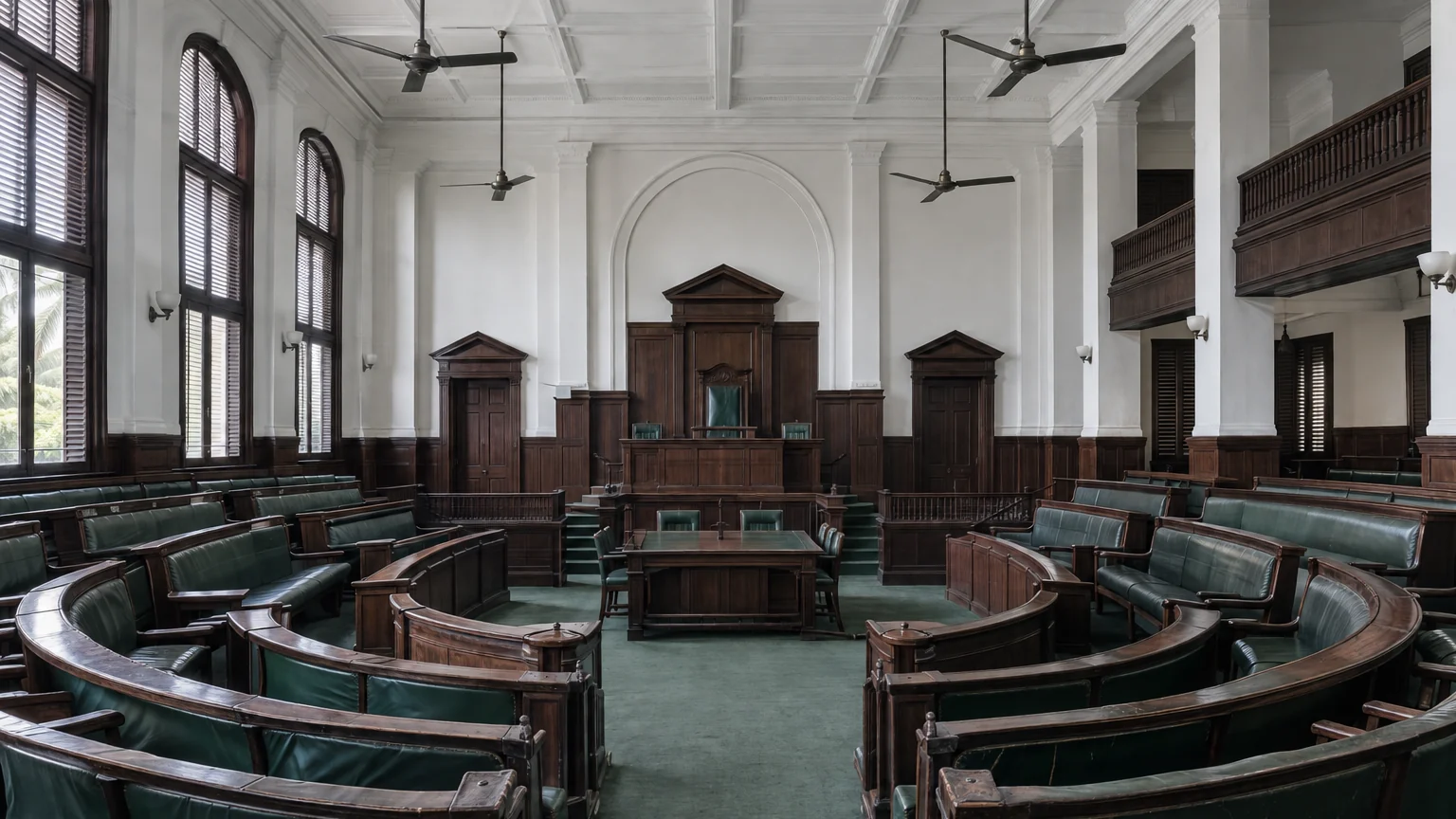

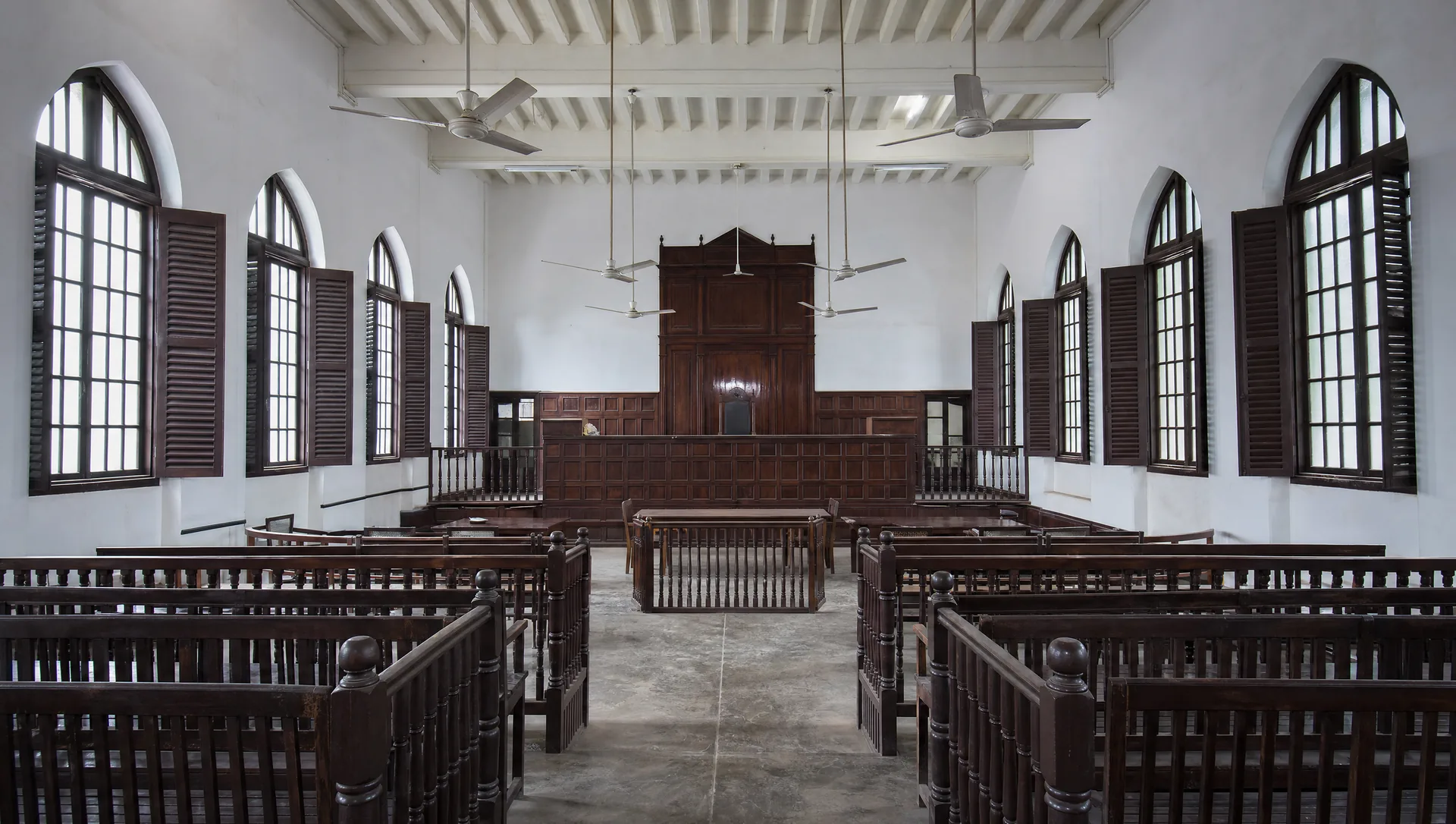
Sri Lanka had no contempt statute until 2024. For nearly two centuries the power to punish contempt sat on the constitutional text and whatever the courts made of it, which meant that the thing you could be imprisoned for was never written down in one place. The Contempt of a Court, Tribunal or Institution Act, No. 8 of 2024, certified on 1 February 2024, finally wrote it down.
What the Act does not do is tell you what it will cost you. There is no penalty section. Seventeen sections define contempt, provide defences, allocate jurisdiction and set out procedure, and not one of them prescribes a sentence. That is not an oversight, and understanding where the punishment actually comes from is the first practical thing to know about this Act.
The two ways to commit contempt
Section 3 splits into two limbs, and they work differently. Section 3(1) is about intention: a person who acts, or fails to act, intending to bring the authority of a court into disrespect or disregard, or intending to interfere with or gravely prejudice ongoing litigation, commits contempt. Nothing need follow from it. The intent is the offence.
Section 3(2) does not ask about intention in the same way. It lists acts that are contempt when you do them: wilful disobedience to a judgment, decree, direction, order, writ or other process; wilful breach of an undertaking given to a court; and a group of publication offences.
The publication limb repays close reading. Section 3(2)(c) catches a person who expresses, pronounces or publishes "any matter that is false" which scandalises or lowers judicial authority, gravely prejudices or unlawfully interferes with proceedings, or obstructs the administration of justice. The word doing the work there is false. At common law, scandalising the court did not depend on the statement being untrue. Under the Act, that limb does.
Recording in court is now contempt by statute
Section 3(2)(d) is the provision most likely to catch someone who had no idea they were at risk. It makes four separate things contempt: using a recording device in court; bringing one in for the purpose of recording; publishing or transmitting a recording of proceedings, or anything derived from one; and tampering with, altering or falsifying such a recording. Acting outside the terms of any leave the court has given is also caught.
Note the second of those. Bringing the device in with the intention of recording is complete on entry. Nothing has to be recorded.
The defences, and how narrow they are not
Section 4 is more protective than the Act's reputation suggests. Accurate facts about a judge, a proceeding, a judgment or an order, published in good faith on a matter of public interest, are not contempt where the risk of prejudice is merely incidental. Accurate reporting of a case without malice is not contempt. Fair comment on the merits of a judgment, or on a matter already heard and decided, is not contempt, provided the publication was bona fide and every attempt was made to avoid contempt.
Section 4(3) preserves any other defence available under any other written law, so the section is a floor rather than a ceiling.
Section 5 deserves more attention than it has had. A person cannot be required to disclose the source of information in a publication for which they are responsible, and cannot be held in contempt for refusing, unless the court is satisfied that disclosure is necessary in the interest of justice, national security, or the prevention of disorder or crime. That is a statutory source protection, sitting in a contempt statute.
Which court can punish you
This is where the Act was least clear, and where it has now been settled.
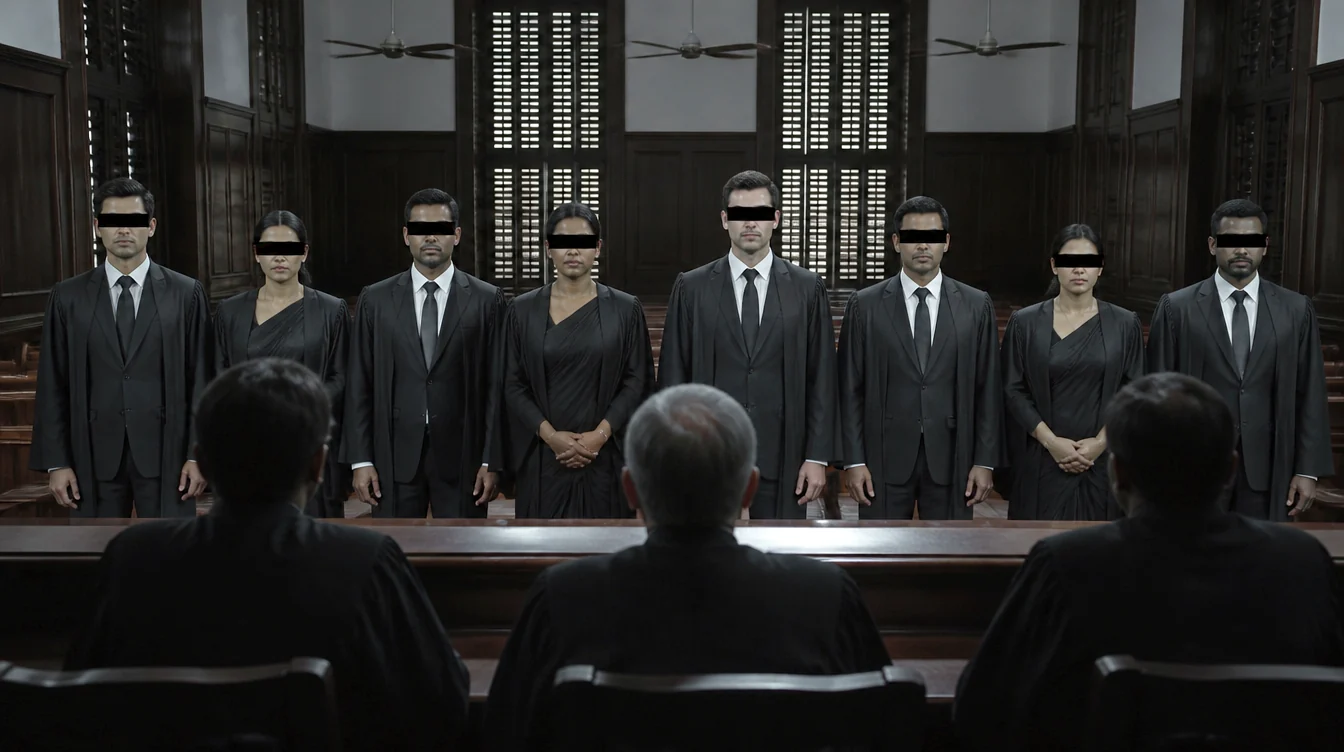
Section 6(1) gives the Supreme Court and the Court of Appeal power to punish contempt of themselves, whether committed in their presence or elsewhere. Section 6(3) gives the Court of Appeal power to punish contempt of a Court of First Instance, tribunal or institution, with a proviso preserving whatever right the lower court already had to punish contempt of itself. Section 7(1) gives Courts of First Instance power over contempt committed in their presence or hearing, or in the course of their proceedings, or by any act specified as contempt in this Act or in any other written law.
Read quickly, that looks as though anything done to a District Court behind its back belongs to the Court of Appeal. On 7 September 2026, in SC/CONTEMPT/5/2024, the Supreme Court held otherwise.
A party had come to the Supreme Court complaining that his opponent had breached an interim injunction issued by the District Court. Counsel argued that Article 105(3) of the Constitution read with section 6(1) of the Act meant that only the Supreme Court could punish contempt of another court committed outside that court's presence. Samayawardhena J, with Wijeratne and Kulatunga JJ agreeing, rejected that and dismissed the application with costs.
The reasoning runs through the last gateway in section 7(1). A Court of First Instance may punish contempt constituted by "any act which is specified in any other written law for the time being in force as being punishable as contempt of court". Section 663 of the Civil Procedure Code provides that an injunction "may in case of disobedience be enforced by the punishment of the offender as for a contempt of court". Section 55 of the Judicature Act gives the District, Family, Small Claims, Magistrate's and Primary Courts a special jurisdiction over contempt in their own proceedings.
| Contempt of | Committed in its presence | Committed elsewhere |
|---|---|---|
| Supreme Court or Court of Appeal | That court, s.6(1) and s.8 | That court, s.6(1) and s.9 |
| A Court of First Instance | That court, s.7(1) and s.11 | Court of Appeal, s.6(3) and s.10; or that court itself where another written law makes the act contempt, s.7(1) |
| A tribunal or institution | Court of Appeal, s.6(3) and s.10 | Court of Appeal, s.6(3) and s.10 |
Putting those together, the Court held that breach of a District Court injunction may be dealt with by the District Court or by the Court of Appeal, exercising concurrent jurisdiction. The forum is a choice, not a rule.
What it can cost you
Because the Act creates no penalty, the sentence comes from whichever instrument governs the court you are before.
| Court | Source of the power | What it allows |
|---|---|---|
| Supreme Court, Court of Appeal | Constitution, Article 105(3) | Imprisonment or fine or both, as the court thinks fit. No statutory ceiling. |
| High Court | Judicature Act, s.18 | Up to five years, simple or rigorous, and a fine in addition or instead. |
| District, Family, Small Claims, Magistrate's, Primary | Judicature Act, s.55 with Civil Procedure Code Ch. LXV (ss.793 to 799) | Fine or imprisonment on summary conviction, carried into effect under the Code of Criminal Procedure. |
The right to be tried by a different judge
A judge who has just been insulted is not an obvious candidate to try the insult. The Act takes that seriously.
Under section 8(4), a person charged with contempt in the face of the Supreme Court or Court of Appeal may apply, orally or in writing, to be tried by a different judge. The matter then goes to the Chief Justice or the President of the Court of Appeal with a statement of facts, for directions. Section 8(5) then does something unusual: at that trial the original judge's statement of facts is received in evidence, but that judge cannot be summoned or examined as a witness.
Section 11(2) puts a positive duty on a judge of a Court of First Instance acting under section 795 of the Civil Procedure Code to ask the accused whether he wishes to be tried by another judge. The question must be asked, not waited for.
One year, and then it is gone
Section 13 is short and easy to miss. A court cannot initiate contempt proceedings, on its own motion or otherwise, more than one year after the contempt was formally brought to its attention. A tribunal or institution cannot refer a matter to the Court of Appeal after the same period.
The clock runs from the date the contempt was formally brought to the court's attention, not from the conduct. For anyone advising on historic non-compliance, that distinction is the whole question.
Firms, companies and the people behind them
Section 14 reaches individuals behind an entity. Where contempt is committed by a body corporate, every director, manager and secretary at the time is deemed to have committed it. For a firm, every partner. For an unincorporated body, every member.
The proviso is the important half: a person is not deemed liable if he proves to the court's satisfaction that the contempt was committed without his knowledge, or that he exercised all due diligence to prevent it. The burden sits on the individual, which is a reason for boards facing an injunction to record what they did about it.
The gap the Act did not close
Section 12 provides an appeal from the Court of Appeal to the Supreme Court, and allows a sentence to be suspended or the appellant bailed pending appeal. Below that, a person aggrieved by a Court of First Instance order who indicates an intention to appeal must have execution suspended or be released on bail until the appeal period expires.
There is nothing above the Supreme Court. Where the Supreme Court convicts for contempt of itself, it sits as a court of first instance and there is no appeal and no review. Writing in the Sri Lanka Journal of International Law, V. Kamal Ahamed argues that this is the Act's central unfinished business, and that Sri Lanka needs something like Article 137 of the Indian Constitution, which lets the Supreme Court review its own judgments.
The point is not academic. In SC Contempt No. 09/2024, an Attorney-at-Law who had accessed court records under a false name and torn pages from a Court of Appeal file was sentenced to two years' rigorous imprisonment, suspended for ten years, together with a fine. That sentence was imposed under an unlimited discretion, at first instance, with no appeal available anywhere.
How three other common law jurisdictions do it
Sri Lanka codified late, which means it had the luxury of watching others try first. Setting the four side by side is the quickest way to see which choices were deliberate.
| Sri Lanka (2024) | England and Wales | India (1971) | Singapore (2016) | |
|---|---|---|---|---|
| Scandalising the court | Retained, but the matter published must be false, s.3(2)(c) | Abolished, Crime and Courts Act 2013, s.33 | Retained; truth is a defence where it is in the public interest and raised bona fide, s.13(b) as amended in 2006 | Retained; the test is a risk that public confidence in the administration of justice would be undermined, s.3(1)(a) |
| Maximum punishment | None for the Supreme Court and Court of Appeal. Five years in the High Court | Two years in a superior court, one month in an inferior court, Contempt of Court Act 1981, s.14 | Six months' simple imprisonment, or a fine of two thousand rupees, or both, s.12 | Three years and a fine of one hundred thousand dollars, High Court and Court of Appeal |
| Time limit to start | One year from when the contempt was brought to the court's attention, s.13 | Not fixed by the 1981 Act | One year from the date the contempt is alleged to have been committed, s.20 | Not fixed by the 2016 Act |
Two things jump out. The first is the punishment row. India caps contempt at six months and a fine of two thousand rupees, a figure set in 1971 and never raised, so the deterrent there is the conviction rather than the sentence. England allows two years. Singapore allows three. Sri Lanka's superior courts are subject to no ceiling at all, because Article 105(3) leaves the sentence to what the court thinks fit and the 2024 Act did not intervene.
The second is scandalising. England abolished it outright in 2013, on the view that judges do not need protection from insult and that the offence had become a museum piece. India kept it and softened it, making truth a defence in 2006. Singapore kept it and gave it a statutory test. Sri Lanka kept it too, but tied it to falsity, which lands closer to India than to England.
The limitation rows differ more than they look. India runs its year from the conduct. Sri Lanka runs its year from the day the court was told about the conduct, which can be a great deal later.
What this means in practice
For anyone appearing, three things follow. Leave the phone outside unless you have leave, because section 3(2)(d) is complete on entry with intent. If you are charged with contempt in the face of the court, ask for a different judge, and expect to be asked if you are before a Court of First Instance. Check when the conduct was formally brought to the court's attention, because section 13 may have closed the door already.
For anyone publishing, section 4 protects accurate reporting and fair comment made in good faith, and section 3(2)(c) requires falsity. That is a more defensible position than the pre-Act law offered. It is not a licence, and the intention limb in section 3(1) sits behind it.