
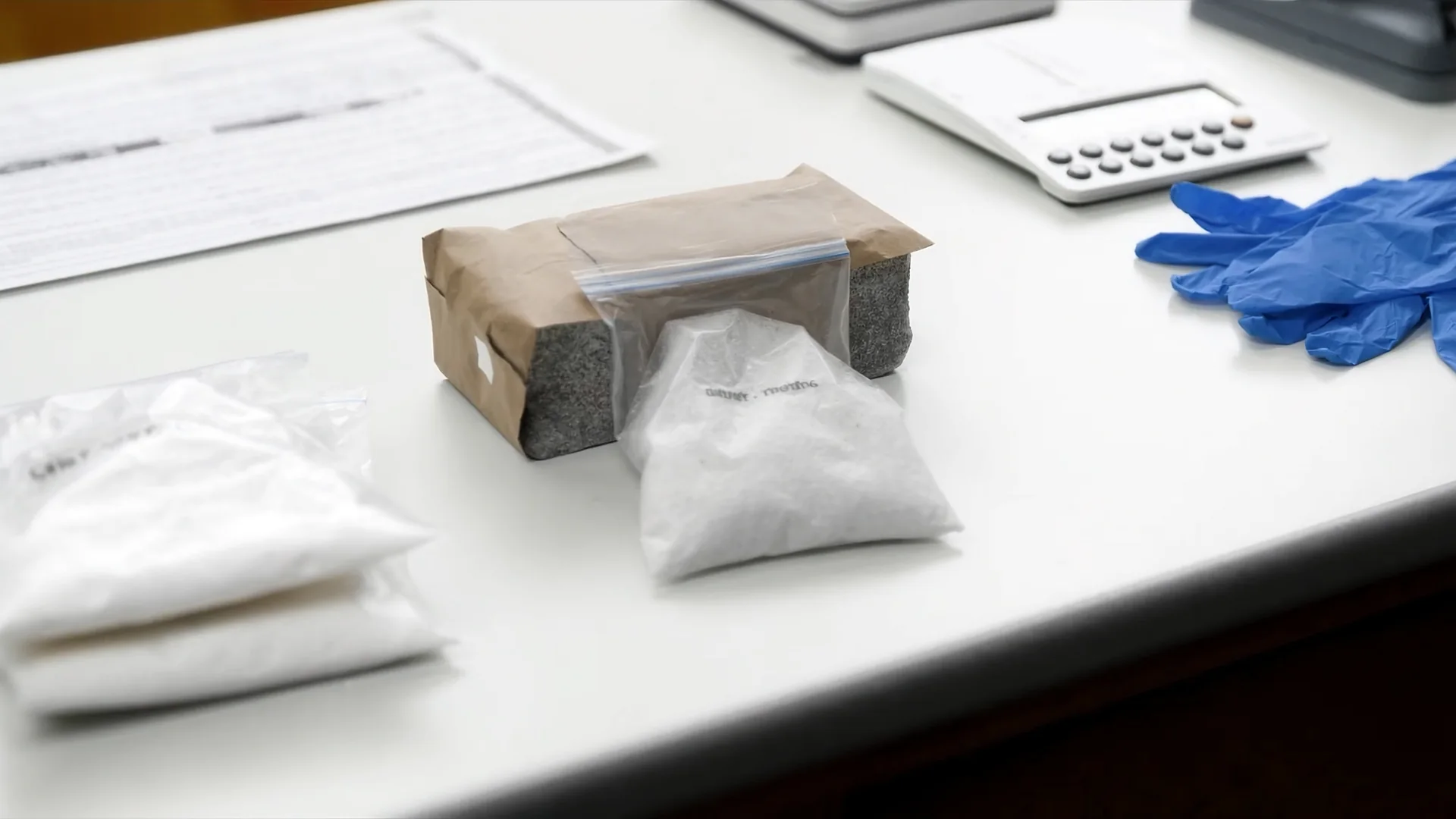
Possession of a controlled drug is an offence in itself; trafficking, which includes selling, storing, transporting or distributing it, is punished far more harshly. Penalties turn on pure quantity, and five grammes or more of heroin, cocaine, morphine or methamphetamine carries death or life imprisonment.
Drug offences carry some of the heaviest penalties in Sri Lankan law. They are governed by the Poisons, Opium and Dangerous Drugs Ordinance, amended many times over the decades, most significantly by Act No. 13 of 1984, Act No. 41 of 2022 and, most recently, Act No. 7 of 2026. Anyone facing an allegation under it should treat the matter as extremely serious from the very start.
Possession versus trafficking
The most important distinction in the Ordinance is between possession and trafficking. Possession of a controlled drug is an offence in itself, but trafficking, which the Ordinance defines to include selling, giving, procuring, storing, transporting, sending, delivering or distributing a drug, is treated far more harshly. The line between the two is where much of the legal contest in a drug case takes place.
How the penalty is set: quantity and the Third Schedule
Under Section 54A, the penalty for trafficking in, importing, exporting or possessing a dangerous drug depends on the pure quantity involved. Part III of the Third Schedule sets out, for each drug, the quantity bands and the penalty attached to each. The heaviest penalties are reserved for the largest quantities, and the thresholds differ sharply between drugs.
For heroin, cocaine, morphine and methamphetamine, the Third Schedule (as amended by Act No. 41 of 2022) fixes the pure-quantity bands as follows:
| Pure quantity | Fine | Imprisonment |
|---|---|---|
| 5 grammes or above | — | Death or life imprisonment |
| 3 grammes to less than 5 grammes | Rs 200,000 to Rs 500,000 | 10 to 20 years |
| 2 grammes to less than 3 grammes | Rs 100,000 to Rs 200,000 | 7 to 10 years |
| Less than 2 grammes | Rs 25,000 to Rs 50,000 | 3 to 5 years |
The thresholds for opium and cannabis are far higher:
- Opium: 1 kilogramme or above carries death or life imprisonment; 500 grammes to less than 1 kilogramme carries life imprisonment. Below that the Schedule steps down through 50 grammes to less than 500 grammes, 10 to less than 50 grammes, and under 10 grammes, none of which carry death or life.
- Cannabis: measured in kilogrammes rather than grammes, and carrying no capital exposure at any quantity. The heaviest band, 100 kilogrammes or above, is a fine of Rs 200,000 to Rs 500,000 with 10 to 15 years' imprisonment.
In every case it is the pure quantity, as certified by the Government Analyst, that matters, not the gross weight of the material seized.
Manufacture and the death penalty
Manufacturing heroin, cocaine, morphine or opium is treated as the gravest offence of all. Under Section 54A(1)(a) it carries death or life imprisonment regardless of quantity, on conviction by the High Court sitting without a jury. Section 54B extends the same liability to anyone who abets, attempts, or does any act preparatory to such an offence.
Offences on the high seas
The most recent change, the Poisons, Opium and Dangerous Drugs (Amendment) Act No. 7 of 2026, inserted a new Section 54AA to address drug offences committed at sea. It makes the manufacture of heroin, cocaine, morphine or opium on the high seas an offence punishable with death or life imprisonment, and it applies to any person, whether a Sri Lankan citizen or a foreign national, on board a ship registered in Sri Lanka or a stateless vessel. The amendment followed a series of large drug seizures by the Sri Lanka Navy in international waters. A second 2026 statute completes the picture on the procedural side: the Judicature (Amendment) Act No. 8 of 2026 replaced paragraph (d) of section 9(1) of the Judicature Act No. 2 of 1978, so that the High Court's jurisdiction over offences committed on the high seas now covers piracy by the law of nations and offences under the Poisons, Opium and Dangerous Drugs Ordinance and the Convention Against Illicit Traffic in Narcotic Drugs and Psychotropic Substances Act No. 1 of 2008. Creating the offence and conferring the jurisdiction to try it were done separately.
The analyst's certificate and pure quantity
Because the penalty bands turn on pure quantity, the report of the Government Analyst is central. The Ordinance attaches evidential weight to it: where a certificate confirms that the gross weight of the drug is two grammes or less, that is prima facie evidence and the pure quantity is deemed not to exceed two grammes. The analysis, the weighing and the chain of custody of the sample are therefore often at the heart of a defence.
The death penalty in practice
Although death remains the maximum sentence for the most serious drug offences, and courts continue to impose it, Sri Lanka has not carried out an execution since 1976. That moratorium should be understood precisely rather than as reassurance: it is a matter of practice rather than law, it has never been legislated, and it has been tested. In 2019 the then President signed death warrants for four prisoners convicted of drug offences, and the executions were halted by the Supreme Court rather than by the moratorium itself. Convicted prisoners are held under sentence of death, and anyone facing such a charge should treat the sentence as real in law rather than assume commutation.
Bail and the rehabilitation route
The Ordinance also restricts bail in the most serious cases. A person accused of a Section 54A, 54AA or 54B offence cannot ordinarily be granted bail except by the High Court in exceptional circumstances, and where the pure quantity is ten grammes or above and the offence is punishable with death or life imprisonment, only the Court of Appeal may grant bail, and again only in exceptional circumstances. Two qualifications are worth noting, because both are commonly misunderstood. For the purposes of that bail provision the drugs concerned are morphine, cocaine, heroin and methamphetamine, so the Court of Appeal threshold does not apply to every controlled substance. And below ten grammes the High Court retains the power to grant bail, a point the Court of Appeal has had to state expressly. Sections 84 and 85 separately limit how long a person may be held before trial and set out how the Attorney General may apply to extend that period. At the other end of the scale, Section 86 allows a genuine user to be diverted away from prosecution where the quantity involved is less than one gramme, the person agrees to undergo treatment for de-addiction and rehabilitation, and the Attorney-General sanctions staying the prosecution.
Because so much turns on the precise quantity, the classification of the drug and the integrity of the analysis, drug cases are rarely as straightforward as they first appear. Anyone facing a drug allegation should obtain expert legal advice immediately, given how severe the consequences can be.