
A co-owner of inherited Sri Lankan land can bring a partition action under the Partition Law No. 21 of 1977 without the other co-owners' consent. The court either divides the land or, where division is impractical, orders a sale. The action can be run from abroad through an attorney.
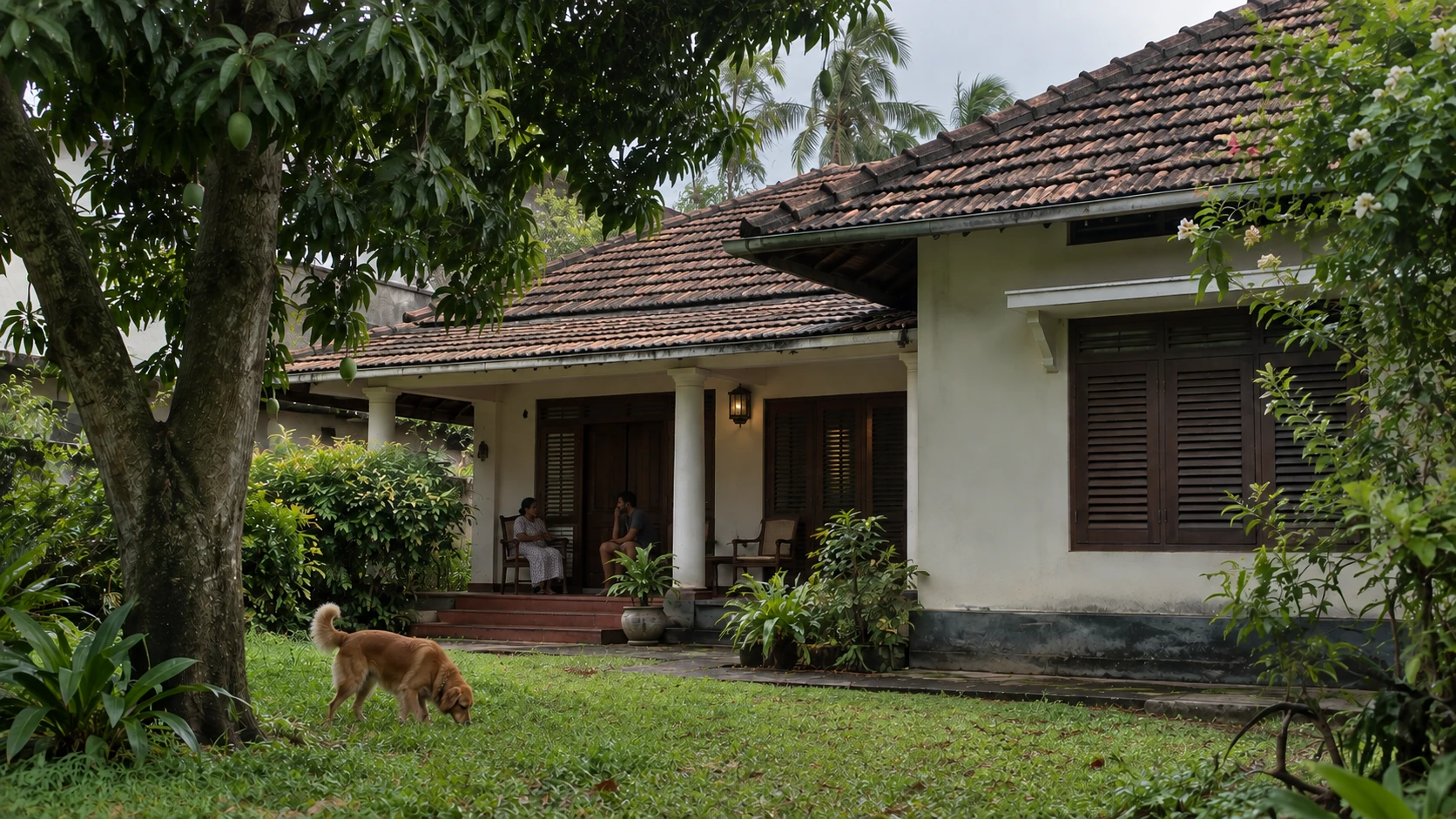
This is the most common Sri Lankan legal problem in the diaspora, and the one families live with longest. A parent dies. The land passes to several children as undivided shares. One of them is still in Sri Lanka, is living in the house, maintains it, and over time comes to speak of it as theirs. The others, in Australia or Britain or Canada, have paper entitlements they have never seen realised, and a reluctance to start something that will fracture the family. Ten years pass. Then someone needs the money, or the occupying sibling starts building, or a buyer appears, and the question becomes urgent after being ignorable for a decade.
What co-ownership actually means here
When land devolves on several heirs without a division, each of them owns an undivided share of the whole. No heir owns a particular room, or the garden, or the back half. That is why the arrangement is so unstable: the sibling in occupation is not a trespasser, because a co-owner is entitled to possess the common property, but nor are they entitled to exclude the others or to treat the property as their own.
It is also why informal solutions fail. An agreement among some of the heirs does not bind the rest, a deed from one co-owner conveys only that co-owner's undivided share, and a buyer offered a fraction of a house with a relative living in it is not a buyer for long. Where the deadlock cannot be negotiated away, the law's answer is partition.
The remedy does not require agreement
The Partition Law allows a co-owner to bring an action to have the co-ownership brought to an end, and the critical feature for an overseas heir is that it does not depend on the others consenting. The occupying sibling can oppose the action, can dispute shares, and can prolong matters, but cannot simply refuse and thereby preserve the status quo.
The court's task is to establish who the co-owners are and in what shares, which is why the plaint is built on a pedigree tracing the devolution from the original owner through each death, marriage and deed. Getting that pedigree right is the substance of the case, and it is the part that overseas families are often best placed to help with, because the documents, the old deeds, the death certificates and the family knowledge are frequently scattered across several countries.
Once the shares are settled, the court decides what to do with the land. Where it can be divided sensibly, it is divided into lots. Where it cannot, and a single house on a modest plot usually cannot, section 26(2)(b) lets the interlocutory decree order a sale of the land in whole or in lots, and section 27 provides the commission to conduct it, with the proceeds distributed according to the shares. That is the answer to a sibling who says the house will never be sold. It can be, by order, and the order does not need their signature.
The procedure itself, the lis pendens registration, the interlocutory decree, the final decree, the 2024 amendment and why the resulting decree is so hard to disturb, is set out in detail in partition actions in Sri Lanka. This article is about the decision to bring one from abroad.
Running it from another country
An overseas co-owner does not need to return. The action is instituted and conducted by a registered attorney appointed on First Schedule Form No. 7 under section 27 of the Civil Procedure Code, which is filed in court rather than registered with the Registrar General. Where a separate power of attorney is genuinely needed, for a sale rather than for the litigation, its formalities are different and stricter, and they are set out in signing documents abroad for use in Sri Lanka.
Two practical matters follow from the distance. The first is the evidence: pedigrees are proved with documents, and the ones that matter are often the oldest, held by the relative least motivated to produce them. Certified copies from the Land Registry and the Registrar General are obtainable independently, and securing them early removes a lever from the other side. The second is time. Partition actions are not quick, and an overseas plaintiff who begins by assembling documents is in a materially better position than one who begins by instructing counsel to find out what exists.
The risk in waiting: prescriptive title
The reason not to leave this for another five years is the Prescription Ordinance. A person in undisturbed and uninterrupted possession of land by a title adverse to the owner for ten years may acquire title by prescription. As between co-owners the position is more demanding than that bare statement suggests, and the reason is not in the Ordinance. The courts have developed a rule that possession by one co-owner is ordinarily taken to be possession on behalf of all, so that something amounting to an ouster, a clear repudiation of the others' rights brought home to them, is generally required before the clock starts against them.
That protection is real but it is not a reason for complacency, because the very conduct diaspora families describe, a sibling who denies the others have any interest, who deals with the land as sole owner, who builds or mortgages or attempts to sell, is the conduct that arguments about ouster are made of. The safe reading is that a co-owner who is told in terms that the property is no longer theirs has received a warning with a clock attached, and that the response to it is legal advice rather than a resolution to address it after the next visit home.
Before you start: what to weigh
Partition is decisive, and decisive is not always what a family wants. The action will end the co-ownership, and it may end with the house sold to a stranger and the occupying sibling required to leave. Where the relationship matters more than the asset, a negotiated buy-out of the overseas shares, properly documented and properly valued, is often the better outcome, and the credible possibility of a partition action is usually what makes such a negotiation possible at all.
What is rarely right is the third option, which is to do nothing while a relative consolidates possession, improvements and, eventually, an argument. The considerations that apply to the estate more broadly, where the death is recent and administration has not been completed, belong with wills, succession and dying with assets in Sri Lanka.
Practical points
- Establish the paper position first: certified extracts from the Land Registry showing what is registered against the land, and the deeds and certificates that prove the devolution.
- Find out what has been done to the land. A mortgage, a building, an attempted transfer or a lease granted by the occupying co-owner all change both the urgency and the strategy.
- Get the proxy signed early. It is quicker than most people expect for an overseas plaintiff, and it cannot be compressed at the end.
- Expect the pedigree to be the battleground. Shares are the substance of a partition action, and an overseas heir who arrives with documents is in a far stronger position than one who arrives with recollections.
- Treat any assertion that the property now belongs solely to the occupier as a trigger for advice, not as family noise. It is the language from which prescriptive claims are later built.
- Consider what outcome you actually want. If it is money rather than the house, a documented buy-out may serve better than a sale by commission, and it is the availability of the action that brings a reluctant co-owner to the table.
Co-owned land is the commonest reason a Sri Lankan family in Australia needs a lawyer in Colombo. The rest of that list is in your Sri Lankan legal loose ends.