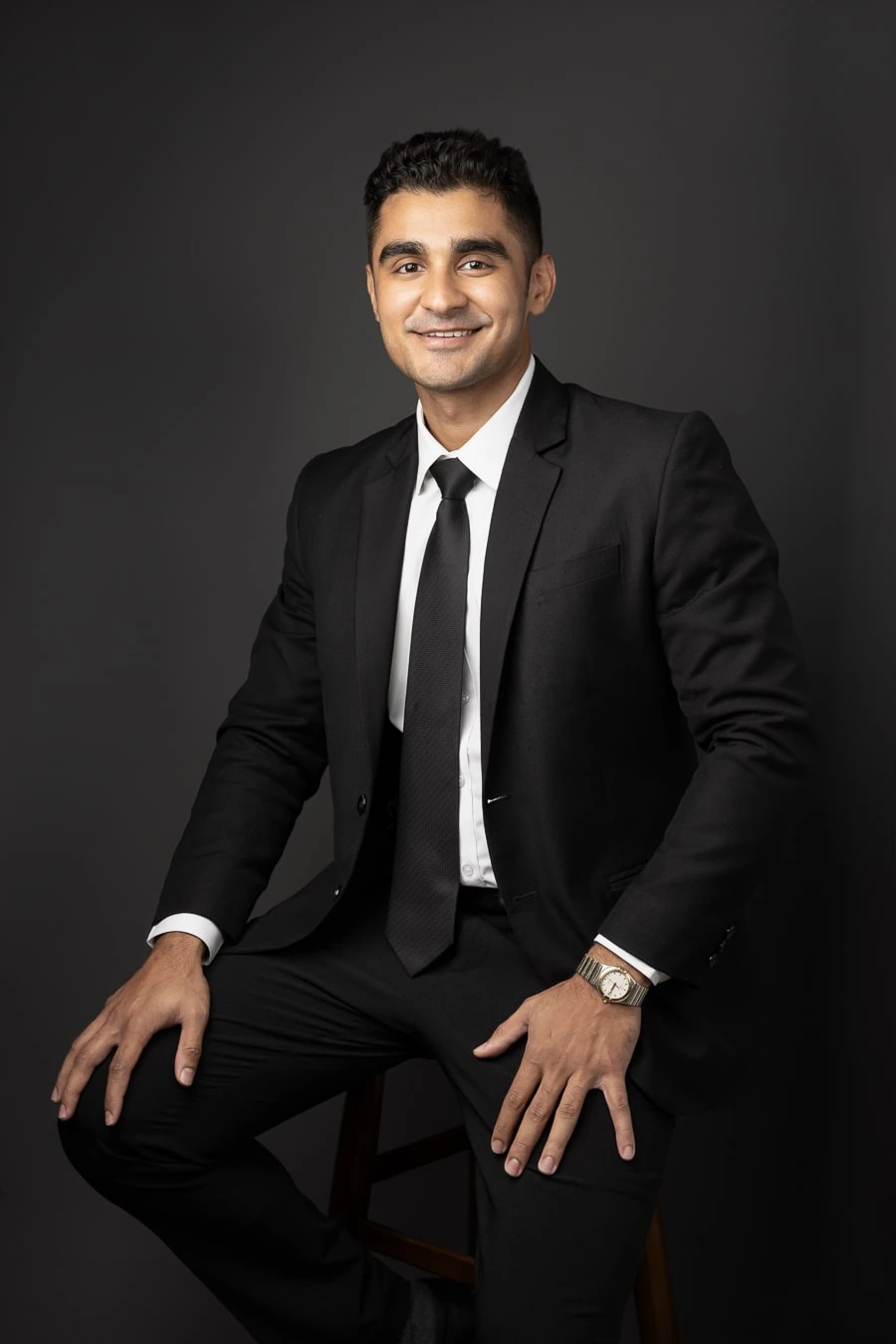
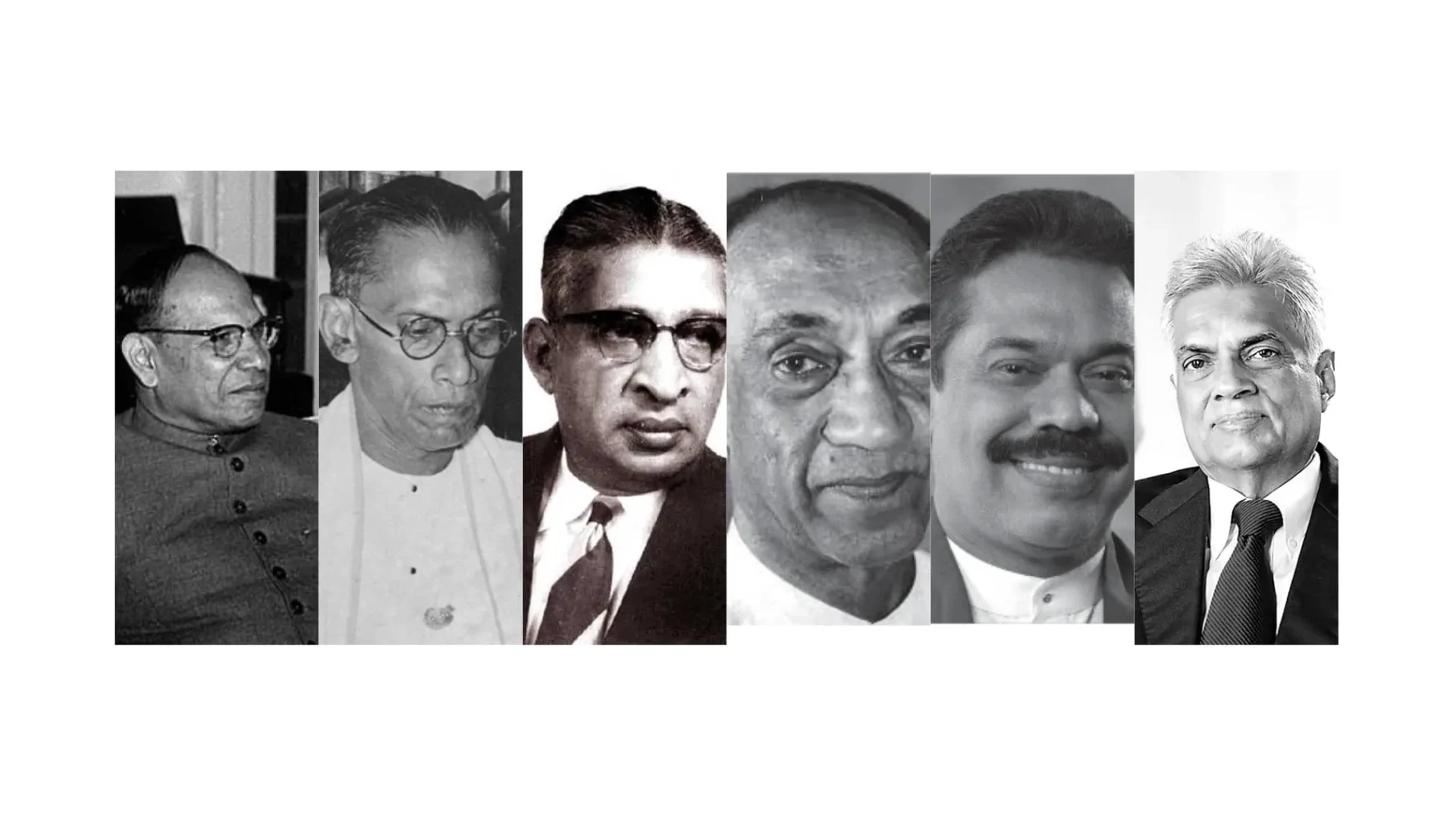
Four of Sri Lanka's ten Presidents held a legal qualification: William Gopallawa was a proctor, and J. R. Jayewardene, Mahinda Rajapaksa and Ranil Wickremesinghe were advocates or Attorneys-at-Law. Two other Prime Ministers, S. W. R. D. Bandaranaike and Dudley Senanayake, were called to the English Bar. The current President and Prime Minister are not lawyers.
Law and public life have been closely connected in Sri Lanka since independence. A striking number of the island's Presidents and Prime Ministers trained as lawyers, were admitted to the Bar, and practised in the courts before turning to politics. This article sets out who among the country's national leaders actually held a legal qualification, where each trained, and what that training meant when the same people came to write the country's constitutions.
How a Ceylonese lawyer qualified
Until 1974 the profession had two branches. Advocates argued cases and took instructions from proctors; proctors kept offices, dealt with clients and drew deeds. Both qualified through the examinations of Ceylon Law College, founded in 1874 under the Council of Legal Education, and were admitted by the Supreme Court. A second route ran through London. A candidate could read for the English Bar at one of the Inns of Court, be called as a barrister, and then take oaths as an advocate of the Supreme Court of Ceylon on his return. The Administration of Justice Law No. 44 of 1973 merged the two branches into a single class of Attorneys-at-Law from 1974. The longer history of the profession, and of the firms that grew up around it, is in the oldest law firms in Sri Lanka.
The Presidents who were lawyers
Sri Lanka has had ten Presidents since the republic was declared on 22 May 1972. The first, William Gopallawa, held a ceremonial office; the nine since 1978 have been Executive Presidents.
- William Gopallawa (President, 22 May 1972 to 4 February 1978): entered Ceylon Law College in 1920 and was enrolled as a proctor and notary public in 1924. He practised in Kandy from 1924 before moving into municipal administration in 1939, and was Governor-General from 2 March 1962 until the republic, when he became its first President.
- J. R. Jayewardene (Prime Minister, 23 July 1977 to 4 February 1978; President, 4 February 1978 to 2 January 1989): entered Ceylon Law College in 1928, won the Hector Jayewardene Gold Medal and the Walter Pereira Prize in 1929, and passed his advocates' examinations in 1931. He began practice at the unofficial Bar before entering full-time politics.
- Mahinda Rajapaksa (Prime Minister 2004 to 2005, 2018, and 2019 to 2022; President, 19 November 2005 to 9 January 2015): educated at Sri Lanka Law College and called to the Bar as an Attorney-at-Law in November 1977. He practised criminal law in Tangalle until 1994.
- Ranil Wickremesinghe (Prime Minister on five occasions between 1993 and 2022; President, 21 July 2022 to 23 September 2024, having acted from 14 July 2022): read law at the Colombo campus of the University of Ceylon, now the University of Colombo, completed his examinations at Ceylon Law College, and took oaths as an advocate in 1972 after apprenticing under H. W. Jayewardene QC. He became an Attorney-at-Law when the profession was reorganised in 1973 and entered Parliament in 1977.
The other six Presidents came to office by different routes. Ranasinghe Premadasa (1989 to 1993) rose through the Colombo Municipal Council from 1950. D. B. Wijetunga (1993 to 1994) was a police constable and then a co-operative inspector. Chandrika Kumaratunga (1994 to 2005) began law studies at Aquinas College but left for France without completing them, taking a diploma in political science at Sciences Po in 1970. Maithripala Sirisena (2015 to 2019) trained in agriculture, Gotabaya Rajapaksa (2019 to 2022) was an army officer from 1971 to 1991, and Anura Kumara Dissanayake, President since 2024, is a science graduate.
The Prime Ministers called to the Bar
Before the executive presidency was created the office of Prime Minister was the country's senior political role, and it too was often held by lawyers. Two Prime Ministers who never became President were called to the English Bar.
- Dudley Senanayake (Prime Minister 26 March 1952 to 12 October 1953, 21 March 1960 to 21 July 1960, and 25 March 1965 to 29 May 1970): read natural sciences at Corpus Christi College, Cambridge, and was admitted to the Middle Temple as a barrister. After returning to Ceylon in 1935 he took oaths as an advocate of the Supreme Court and practised briefly under H. V. Perera KC before politics took over.
- S. W. R. D. Bandaranaike (Prime Minister 12 April 1956 to 26 September 1959): read philosophy, politics and economics at Christ Church, Oxford, graduating in 1923, and was called to the Bar at the Inner Temple in 1924. On his return he took oaths as an advocate of the Supreme Court. He died in office after being shot on 25 September 1959.
The three lawyer-Presidents also served as Prime Minister: J. R. Jayewardene from 1977 to 1978, Mahinda Rajapaksa three times between 2004 and 2022, and Ranil Wickremesinghe across five terms between 1993 and 2022. In each case the leader had been admitted to the Bar before entering Parliament.
The remaining Prime Ministers were not lawyers. D. S. Senanayake was a planter and businessman. Sir John Kotelawala read agriculture at Christ's College, Cambridge, and was a planter and volunteer officer in the Ceylon Light Infantry. W. Dahanayake was a schoolmaster at St Aloysius' College, Galle. Sirimavo Bandaranaike finished school at nineteen and went into social work. Ratnasiri Wickremanayake read for the Bar at Lincoln's Inn but chose politics rather than sit the examination, so he was never called. D. M. Jayaratne was a teacher and postmaster, and Dinesh Gunawardena took a business degree at the University of Oregon.
| Leader | Office and years | Legal training |
|---|---|---|
| D. S. Senanayake | Prime Minister, 1947 to 1952 | None; planter and businessman |
| Dudley Senanayake | Prime Minister, 1952 to 1953, 1960, 1965 to 1970 | Barrister, Middle Temple; advocate of the Supreme Court of Ceylon from 1935 |
| Sir John Kotelawala | Prime Minister, 1953 to 1956 | None; read agriculture at Cambridge |
| S. W. R. D. Bandaranaike | Prime Minister, 1956 to 1959 | Barrister, Inner Temple, 1924; advocate of the Supreme Court |
| W. Dahanayake | Prime Minister, 1959 to 1960 | None; schoolteacher |
| Sirimavo Bandaranaike | Prime Minister, 1960 to 1965, 1970 to 1977, 1994 to 2000 | None |
| William Gopallawa | President, 1972 to 1978 (non-executive) | Proctor and notary public, Ceylon Law College, enrolled 1924 |
| J. R. Jayewardene | Prime Minister, 1977 to 1978; President, 1978 to 1989 | Advocate, Ceylon Law College, examinations passed 1931 |
| Ranasinghe Premadasa | Prime Minister, 1978 to 1989; President, 1989 to 1993 | None |
| D. B. Wijetunga | Prime Minister, 1989 to 1993; President, 1993 to 1994 | None; police constable, then co-operative inspector |
| Chandrika Kumaratunga | Prime Minister, 1994; President, 1994 to 2005 | Began law studies at Aquinas College; did not complete them |
| Ratnasiri Wickremanayake | Prime Minister, 2000 to 2001, 2005 to 2010 | Read for the Bar at Lincoln's Inn; never called |
| Mahinda Rajapaksa | Prime Minister, 2004 to 2005, 2018, 2019 to 2022; President, 2005 to 2015 | Attorney-at-Law, Sri Lanka Law College, called November 1977 |
| D. M. Jayaratne | Prime Minister, 2010 to 2015 | None; teacher and postmaster |
| Maithripala Sirisena | President, 2015 to 2019 | None; diploma in agriculture |
| Gotabaya Rajapaksa | President, 2019 to 2022 | None; army officer, then information technology |
| Ranil Wickremesinghe | Prime Minister, five terms 1993 to 2022; President, 2022 to 2024 | Advocate, University of Ceylon and Ceylon Law College, oaths 1972; Attorney-at-Law from 1973 |
| Dinesh Gunawardena | Prime Minister, 2022 to 2024 | None; business degree, University of Oregon |
| Anura Kumara Dissanayake | President, 2024 to present | None; BSc, University of Kelaniya |
| Harini Amarasuriya | Prime Minister, 2024 to present | None; PhD in social anthropology, Edinburgh |
Lawyers and the making of the Constitutions
Sri Lanka has had three constitutions: the Soulbury Constitution, which came into force in 1947 and under which the country took independence in February 1948, the Republican Constitution of 1972 and the present Constitution of 1978. Lawyers drafted the second and third.
The 1972 Constitution was the work of the United Front government elected in 1970, which used Parliament as a Constituent Assembly. Colvin R. de Silva, Minister of Constitutional Affairs, chaired the drafting committee. He had taken a doctorate at King's College London in 1932, read law at Lincoln's Inn and been called to the Bar, and then practised as an advocate of the Supreme Court, chiefly in criminal defence. The Constituent Assembly, which first sat in July 1970, adopted the new Constitution on 22 May 1972 by 119 votes to 16. It declared Sri Lanka a free, sovereign and independent republic, vested legislative power in a single-chamber National State Assembly, and ended the last constitutional ties to the Crown. Felix Dias Bandaranaike, an advocate who had trained at the University of Ceylon and Colombo Law College, was Minister of Justice in the same government and carried the Administration of Justice Law No. 44 of 1973 that reorganised the profession.
The 1978 Constitution came from the other side of politics. J. R. Jayewardene's government, elected in July 1977 with a five-sixths majority, first amended the 1972 Constitution to make the presidency an executive office, then had a Select Committee for Constitutional Reform appointed in November 1977 with Jayewardene, himself an advocate, as its first chairman. He gave up the chair when he became President in February 1978 and Ranasinghe Premadasa took it over on 23 February 1978. Mark Fernando, then a practising lawyer and later a judge of the Supreme Court, worked with the small group that designed the executive presidency. The new Constitution was promulgated on 7 September 1978. It created a unicameral Parliament and an Executive President who, under Article 30(1), is Head of the State, Head of the Executive and of the Government, and Commander-in-Chief of the Armed Forces. The courts it established, and the way appeals move between them, are described in how Sri Lanka's court system works.
The office-holders in 2026
Neither of the current office-holders is a lawyer. Anura Kumara Dissanayake has been President since 23 September 2024; he took a Bachelor of Science degree from the University of Kelaniya in 1995. Harini Amarasuriya was sworn in as the sixteenth Prime Minister on 24 September 2024; she read sociology at the University of Delhi and took a doctorate in social anthropology at the University of Edinburgh. The last President with a legal qualification was Ranil Wickremesinghe, whose term ended on 23 September 2024.
A tradition of law and public life
These careers point to something consistent about Sri Lanka: the courtroom has often been a route to the highest offices in the land. For the lawyer-leaders, admission as an advocate, a proctor or an Attorney-at-Law came before Parliament. The profession that produced them is described in the heritage pages of this site, and its work in the constitutional field continues through public policy and government practice.