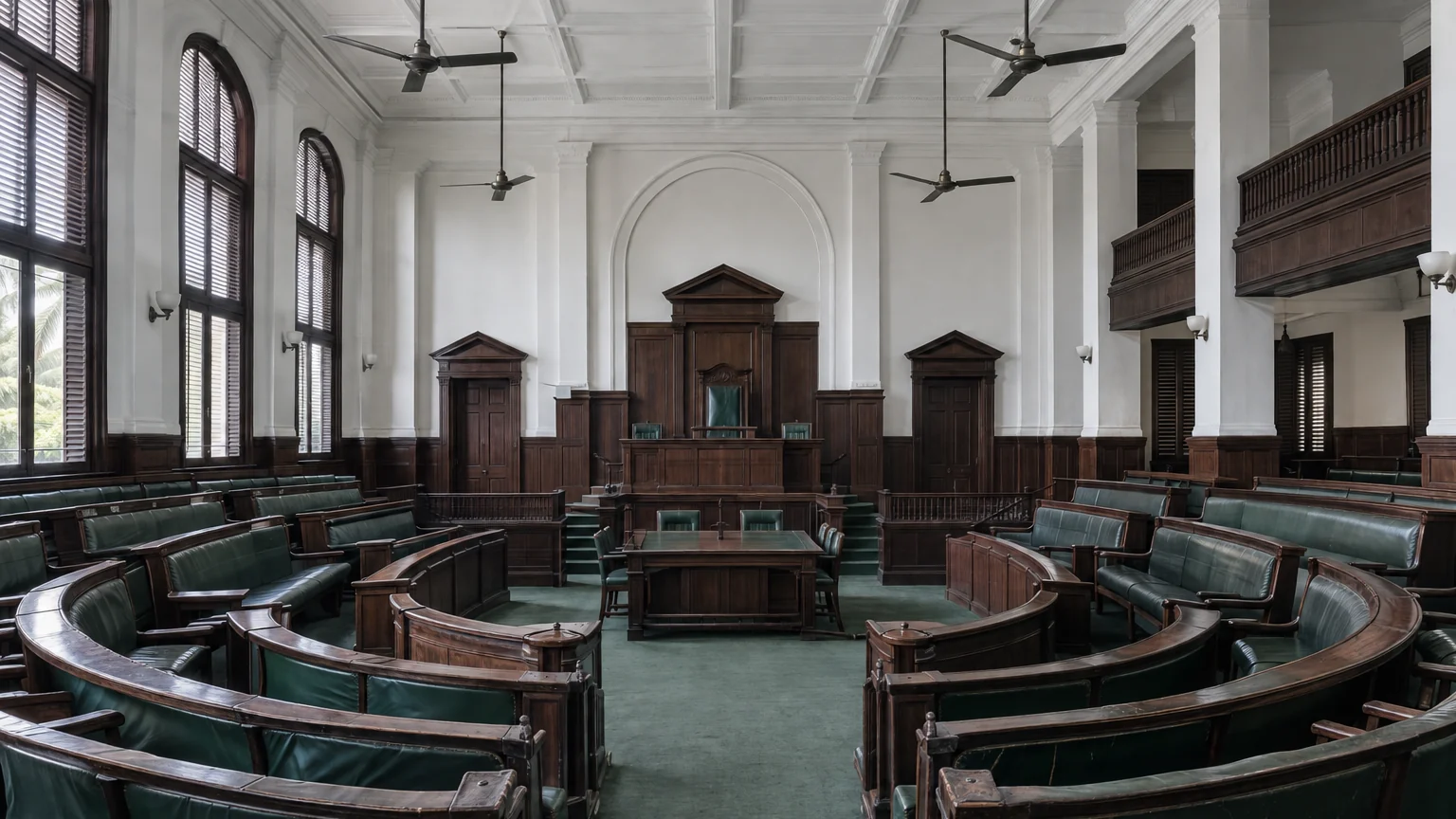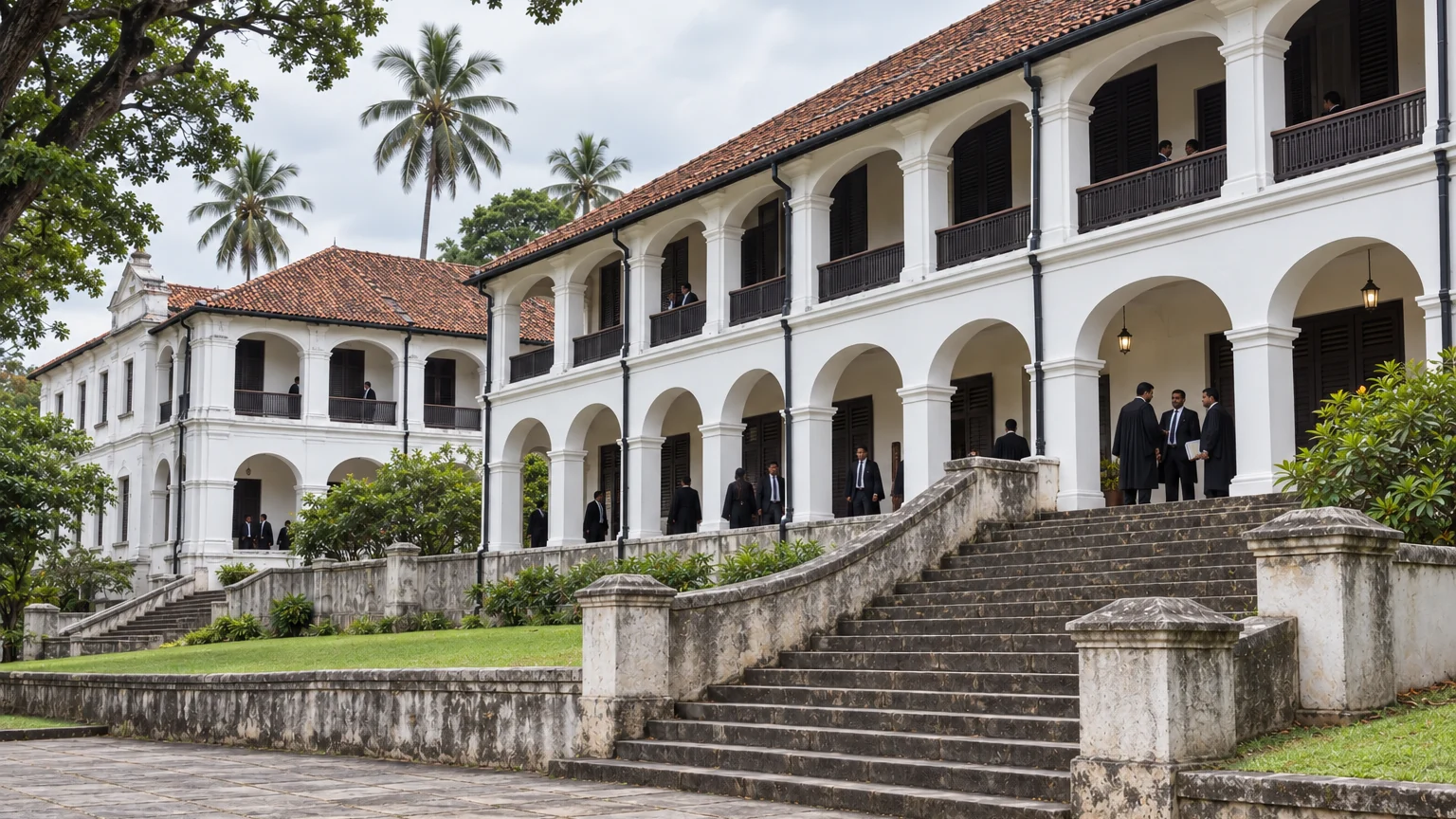

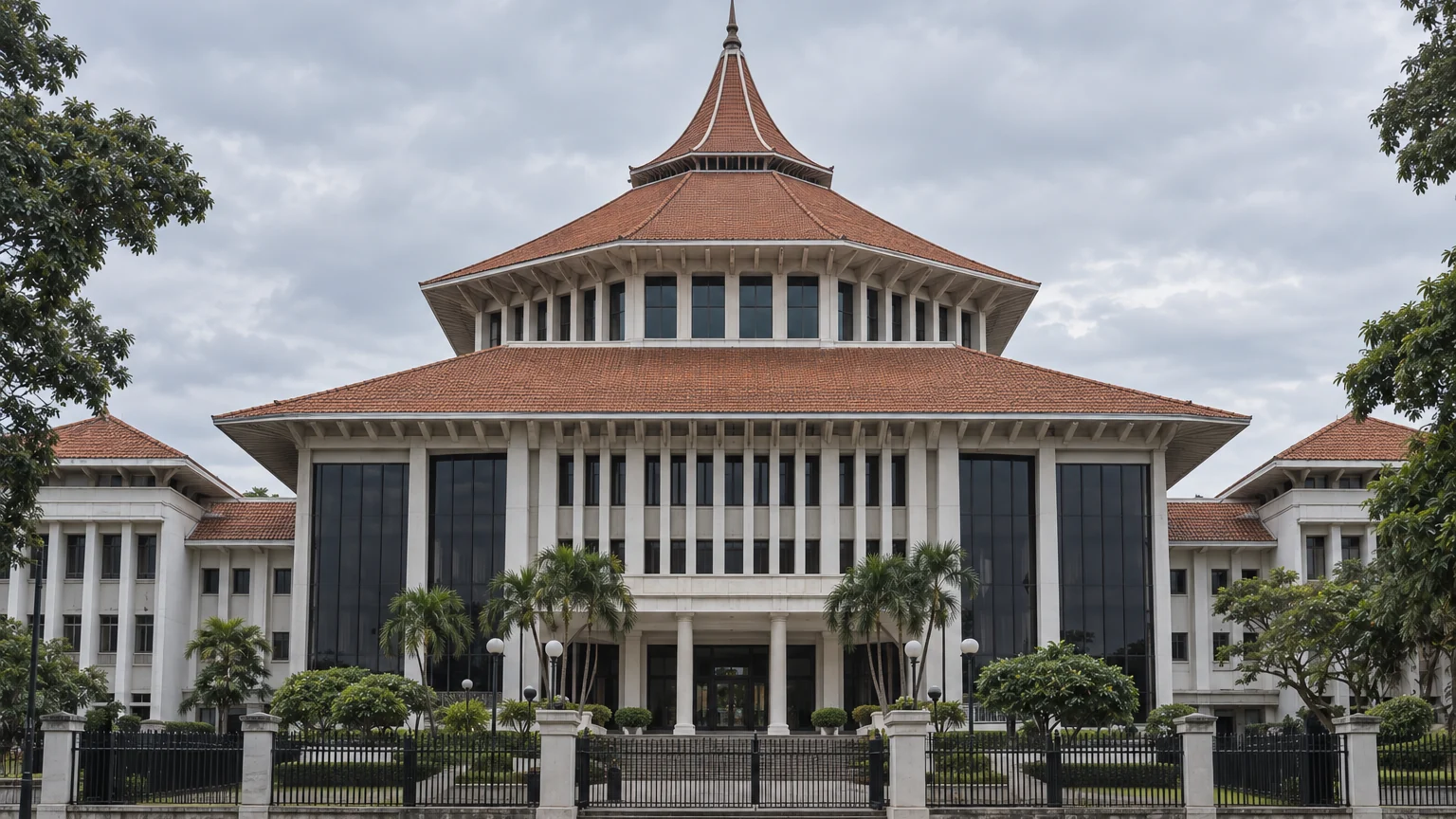
The Supreme Court of Sri Lanka and the office of Chief Justice were created in the same instrument, a royal charter of 1801. The court was remade by a second charter in 1833, which unified the judiciary across the whole island. Its present form comes from the 1978 Constitution.
That is a short answer to a question that gets asked in a particular way. People want to know how old the court is, and the honest reply is that the institution is older than the Republic, older than the Dominion, and older than the unification of the island it now serves.
1801: a court for a colony three years old
Britain took the maritime provinces from the Dutch in 1796. Ceylon became a Crown colony in 1802. Between those two dates, in 1801, a Charter of Justice established a Supreme Court of Judicature for the island and provided that its principal judge should be styled the Chief Justice.
Codrington Edmund Carrington held the office first, from 1801 until 1806. The court he presided over did not cover the island, and it did not cover the population either. The Kandyan Kingdom was independent until 1815, so its reach was the coastal belt the Dutch had governed; and within that belt its jurisdiction ran principally to Europeans and British subjects, with provincial courts and landraads handling most matters among everyone else. The residual civil law it applied was the Roman-Dutch law the Proclamation of 1799 had kept in force, though the Charter also made it a court of equity on the model of Chancery.
What followed was not orderly. Rather than being replaced when it needed changing, the 1801 Charter was layered over: each round of reform produced a further charter, or a proclamation, striking out or altering parts of what had gone before. Nobody ever sat down and restated the whole. By the 1820s the law governing the courts was spread across a stack of instruments and had to be assembled before it could be stated at all, which is a practical problem rather than an aesthetic one. Sir Edward Barnes, newly arrived as Lieutenant-Governor, was among those who said so, and in March 1821 sent home a sketch for yet another additional charter.
The commission that arrived to look at everything
The drafting history of what followed has been worked over closely by historians, in particular by Vijaya Samaraweera and more recently by Shaunnagh Dorsett, whose accounts of the Colonial Office papers this section follows. The quotations from the commissioners' instructions and from Bentham are from the printed sources.
In January 1823 the Secretary of State for War and the Colonies, Lord Bathurst, sent instructions to commissioners appointed to inquire into the eastern colonies. (The office should not be confused with the Colonial Secretary of Ceylon, which was the island's own senior secretariat post.) On the judicial side their brief was wide: the whole system and administration of civil and criminal justice, the conduct and regulation of the police, the jurisdiction of the courts of Admiralty, and the introduction of the English language into the courts and public proceedings.
The commission is remembered in Sri Lanka under two names, Colebrooke and Cameron. William Colebrooke took the administrative side. Charles Hay Cameron, who joined later, took the judicial and legal one, and it is Cameron's report on the judicial establishments that shaped the charter which followed.
Two features of his proposals matter more than the rest.
The first is uniformity. Ceylon in the early 1830s was administratively two places: the Maritime provinces taken from the Dutch, and the Kandyan territory annexed in 1815. Cameron declined to treat them as needing different courts. His premise was that the inhabitants of the two regions had no special needs in the administration of justice that separate arrangements should answer, which was a confident thing for a newly arrived commissioner to conclude. Whatever one makes of it, the consequence was a single judicial system for the whole island, and Sri Lanka has had one ever since.
The second is the organising principle, and it is unmistakably Benthamite. Cameron held that jurisdiction should be distributed by geography rather than by category of law: a court should hear all matters arising within its district, civil and criminal alike, rather than business being parcelled out between courts of law and equity, or common pleas and pleas of the Crown, as it then was in England. Bentham had argued precisely this, that the division of jurisdiction should be made on geographical and not on metaphysical principle.
It is worth noticing what that means. Ceylon got a single court hearing law and equity together some forty years before the Judicature Acts did the same in England. Colonies were, in this period, where such ideas could be tried.
1833: the charter the present system descends from
The Charter of Justice of 1833 was proclaimed during the administration of Governor Sir Robert Wilmot-Horton, in the same year that the old advisory council gave way to a Legislative Council. A new Supreme Court opened under it.
The charter did three things that still show.
It made the judiciary island-wide and uniform, so that the courts of the former Kandyan provinces and those of the maritime belt formed one system. It established District Courts with jurisdiction over what arose in their districts, which is the ancestor of the District Court a Sri Lankan lawyer files in today. And it separated the judges from the Governor, giving the bench an independence it had not reliably had when judicial and executive authority ran together in the same hands.
The Supreme Court sat above that structure, with an appeal beyond it to the King in Council in London.
None of this arrived perfectly formed, and the drafting went back and forth between Colombo and Whitehall over years rather than months. But the shape is the one that survived: a single hierarchy, districts at the base, a Supreme Court at the top, and an appellate route out of the island.
The appeal to London, and its closing
For most of the court's existence, it was not the last word. An appeal lay from the Supreme Court to the King in Council, and after the Judicial Committee Act 1833 to the Judicial Committee of the Privy Council. Ceylon appeals were heard in London through the colonial period, through the Dominion years after 1948, and into the 1970s.
That route closed with the Court of Appeal Act, No. 44 of 1971, whose long title includes the abolition of appeals to Her Majesty in Council and whose section 18 declared that no appeal should lie from any judgment or order of the Supreme Court, or of any other court or tribunal, to Her Majesty in Council. Section 14 repealed the Appeals (Privy Council) Ordinance. Appeals still registered at the Privy Council on the appointed date were not extinguished: section 19 deemed them appeals duly made to the new appellate court here, and it was the London proceedings that were discontinued. Section 20 preserved the Judicial Committee's power to dispose of appeals in which it had already heard argument or reported.
The consequence for practice outlasts the constitutional moment. Sri Lankan cases are reported in the Privy Council reports and remain authority for what they decided, and English decisions continue to carry persuasive weight in the fields where English law was received by statute.
Two constitutions, and the court that stands now
The 1972 Constitution made Ceylon a republic and reorganised the courts. The 1978 Constitution replaced that settlement, and it is the instrument the present court rests on. Article 105 names the Supreme Court, the Court of Appeal and the High Court, and makes the first two superior courts of record; the Judicature Act, No. 2 of 1978, was enacted in terms of Article 105(1) to constitute the courts of first instance beneath them.
| Question | Provision | What it says |
|---|---|---|
| How many judges? | Article 119(1) | The Chief Justice and not less than six and not more than sixteen other judges |
| Who appoints them? | Article 107(1) | The President, subject to the approval of the Constitutional Council, by warrant under his hand |
| How long do they hold office? | Article 107(2) | During good behaviour; removable only by order of the President after an address of Parliament supported by a majority of the whole membership, on the ground of proved misbehaviour or incapacity |
| What starts a removal? | Article 107(2), proviso | No such resolution may be entertained by the Speaker unless notice of it is signed by not less than one-third of all Members and sets out full particulars |
| When do they retire? | Article 107(5) | Sixty-five for judges of the Supreme Court; sixty-three for judges of the Court of Appeal |
| Is the Attorney-General heard? | Article 134(1) | He must be noticed and has the right to be heard in the Court's jurisdiction under Articles 120, 121, 122, 125, 126, 129(1) and 131 |
Two of those provisions repay a second look, because they are the ones that decide how insulated the court is.
Article 107(1) takes the appointment out of the President's sole hands. Every judge of the Supreme Court and of the Court of Appeal, the Chief Justice included, requires the Constitutional Council's approval. That is the same mechanism that governs the appointment of the Attorney-General and the Inspector-General of Police.
Article 107(2) sets the tenure. A judge holds office during good behaviour, and the only route to removal runs through Parliament: an address supported by a majority of the total membership, on the ground of proved misbehaviour or incapacity, with the proviso requiring that notice of the resolution be signed by not less than a third of all Members and set out full particulars before the Speaker may entertain it or place it on the Order Paper. The design is deliberately difficult, in the way such provisions generally are.
What a foreign lawyer should take from it
Three things, and the third is the one people miss.
- The institution is old and continuous. A court established in 1801 and restructured in 1833 has a body of reported decision-making behind it that predates most of the statutes it now applies, which is why nineteenth-century authority is still cited in argument.
- The structure will look familiar. District courts at the base, a Supreme Court at the top, an intermediate appellate court between them, judgments in a common-law style. The 1833 charter built it on English lines and it has not been rebuilt since.
- The substantive law underneath it will not be familiar. The system is common-law in shape and substantially Roman-Dutch in content, and the court has spent two centuries applying Continental principles through English machinery. The building is one tradition and the furniture is another.
It is why a lawyer who reads only the court structure will draw the wrong conclusions about what the court will decide.