
Hulftsdorp is the only place in Sri Lanka where a working court complex, the country's oldest law school and a street of eating houses that open before the courts do all sit inside a few hundred metres of each other. Lawyers call it the hill. Most of them could not tell you who Hulft was.
He was Dutch, he was twenty-three when he was made Director-General of the Dutch East India Company, and he died outside the walls of Colombo without ever entering the city.
The man the hill is named after
Gerard Pietersz Hulft was born in Amsterdam on 12 December 1621. He rose through the Company quickly enough that by his early thirties he held its second-highest office, and in August 1655 the Governor-General, Joan Maetsuycker, sent him to Ceylon with eleven ships and eleven hundred and twenty soldiers.
The target was Portuguese Colombo. The Dutch had been taking the Portuguese coastal forts one by one for a decade, in alliance with the Kandyan kingdom in the interior, and Colombo was the last of them worth having.
Hulft laid siege in the autumn of 1655. On 12 November a shot from the town wall hit him in the right shoulder. He did not die of it for another five months. He died on 10 April 1656, and the city surrendered in May, to the force he had led.
The Dutch buried him and named the ground his men had camped on after him. Dorp is village. Hulft's dorp became Hulftsdorp, and the name outlasted the Dutch, the British, and the colony itself.
The house that became a courthouse
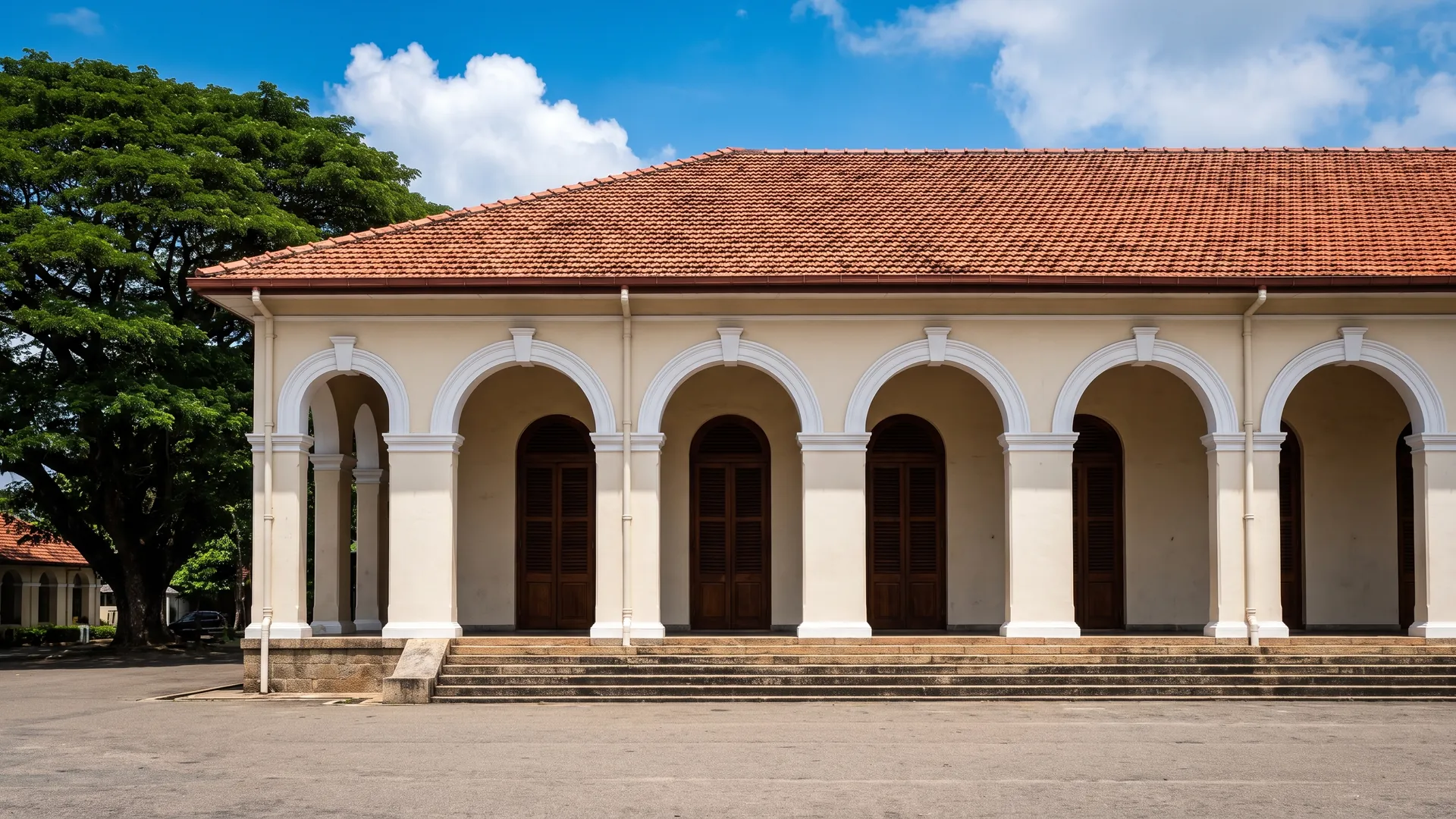
The oldest structure in the complex went up in 1655, during the siege, as Hulft's own dwelling. It is now the old High Court building, which means the hill had a house on it a hundred and fifty years before it had a judge.
The judicial history proper starts in 1805. The British had taken the maritime provinces from the Dutch in 1796 and Governor Frederick North occupied the Dutch house; the same year, John Dean was installed as the first Provincial Judge. From that point the hill stops being a Dutch memory and starts being a place where cases are heard.
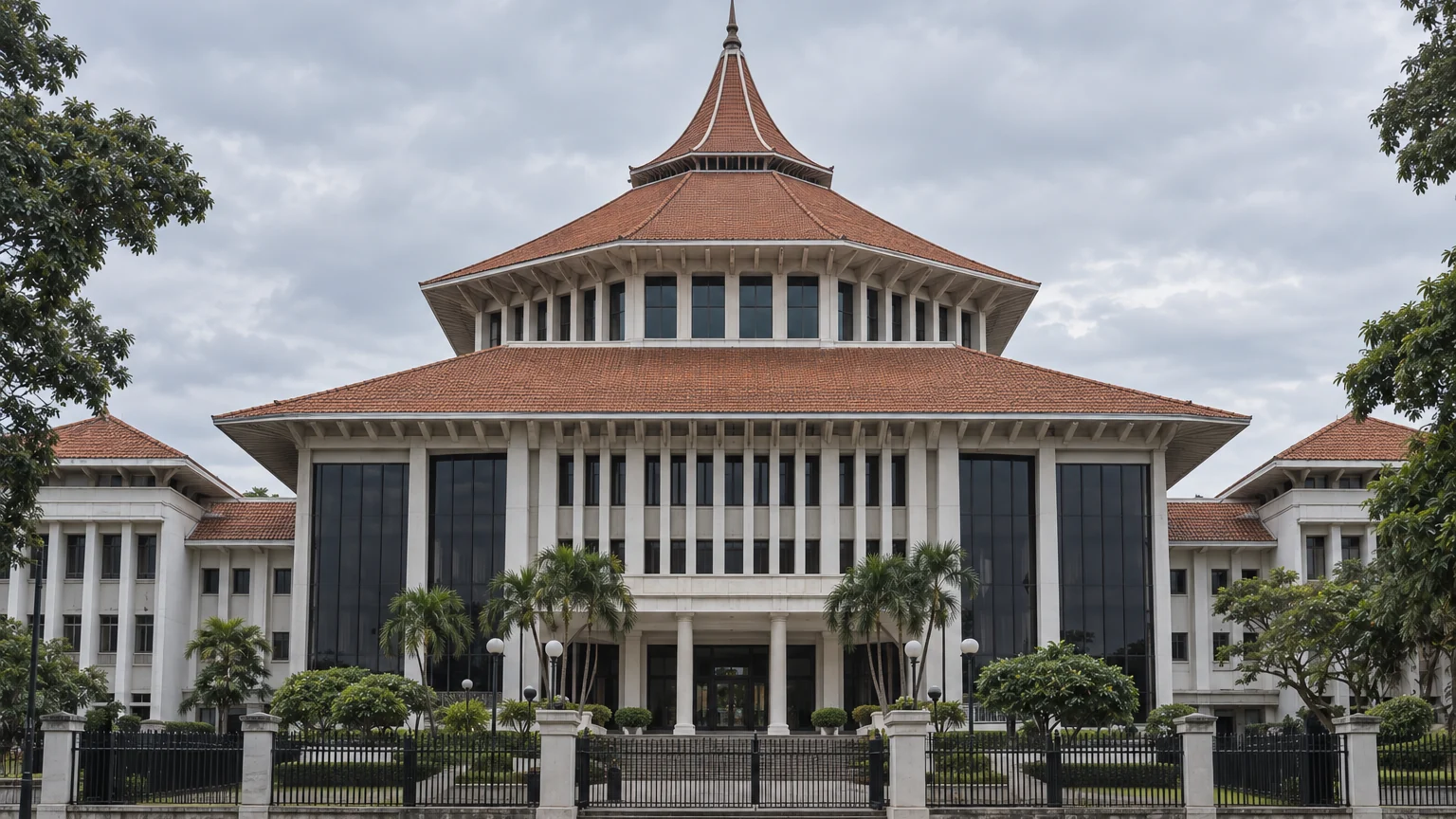
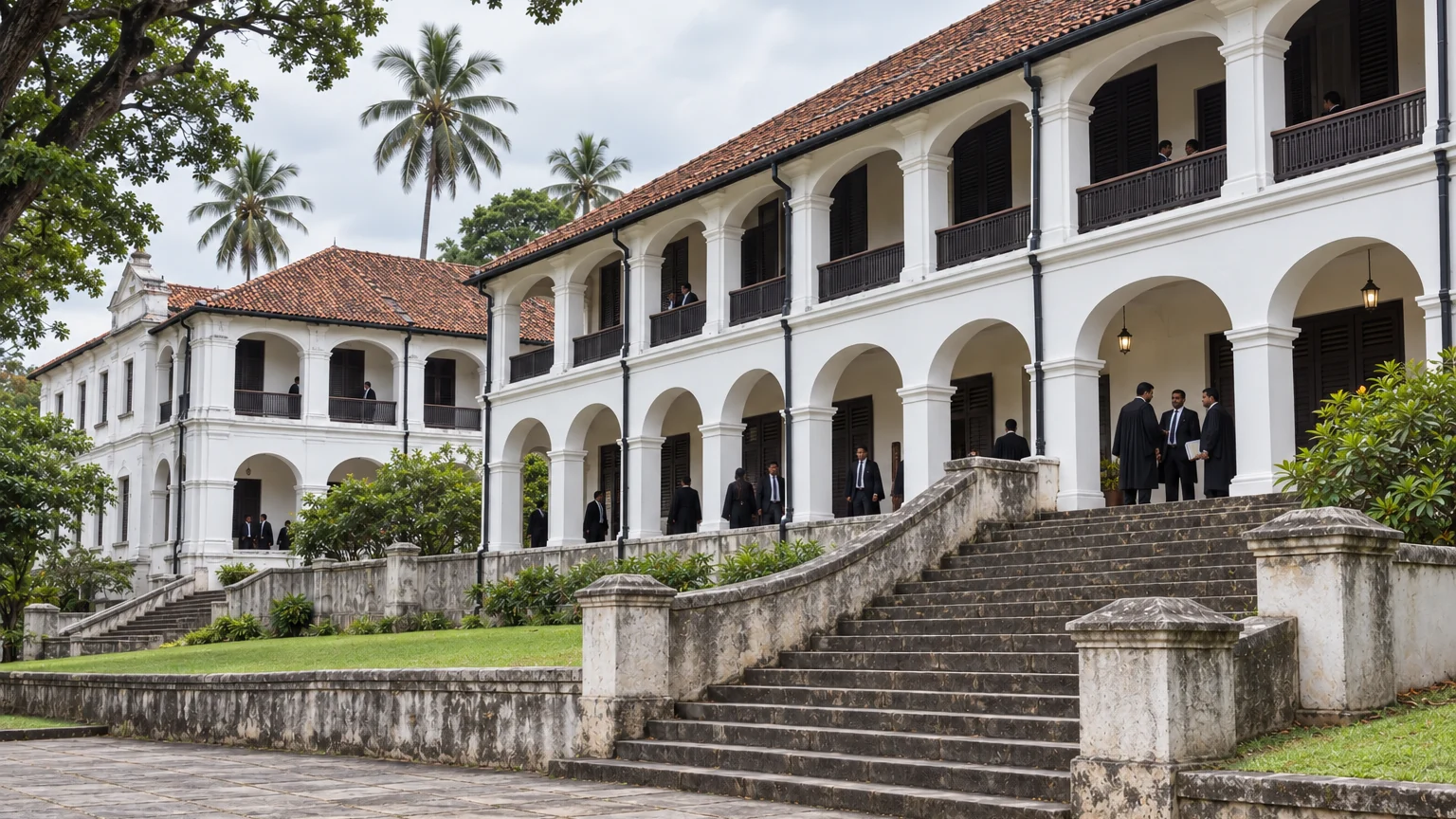
What grew around it over the next two centuries is not a single building but an accumulation. The complex today holds two Special High Courts, eight High Courts, three Commercial High Courts and eight District Courts, alongside the Magistrate's Courts and the traffic courts. The Supreme Court and the Court of Appeal sit on the same hill.
Where the profession learned its trade
Legal education arrived on Hulftsdorp within a few decades of the courts.
The Council of Legal Education was constituted under Ordinance No. 19 of 1873, and the college it authorised opened the following year to prepare candidates for the advocates' and proctors' examinations. Ordinance No. 2 of 1900 incorporated the Council, seating the Chief Justice, the puisne justices, the Attorney General and the Solicitor General alongside five advocates and three proctors.
The building most people picture when they say Law College, at 244 Hulftsdorp Street, went up in 1911. Every attorney-at-law admitted in Sri Lanka since has passed through it or its successors, which is why the hill functions as a professional address rather than only a geographic one. The oldest law firms in Sri Lanka were founded within walking distance of it.
What is protected and what is not
On 22 July 2011 the High Court, District Court and Commercial Court buildings were declared protected monuments by gazette. That covers the fabric of three buildings on a site where most of the working estate is unprotected, and the condition of the rest has been a recurring complaint in the press for two decades.
The tension is ordinary enough for any old court estate. The buildings that are architecturally significant are not always the ones where the lists are longest, and a protected facade does not create a consultation room.
The other economy of the hill
A court complex generates its own trade. Around Abdul Hameed Street, near the Aluth Kade police station, there is a strip of eating houses that has served the hill for longer than most of the practitioners on it have been admitted.
The best known of them has been open since 1956, run by M. Naleem, whom everyone calls Dudley maama. It keeps three menus and does not close, because a court day does not keep office hours. The kitchen is unapologetic: goat brain curry, cuttlefish egg curry, tripe, fish heads. Short eats go for twenty or thirty rupees.
It is not incidental to the legal quarter. Witnesses wait there, junior counsel eat there between mentions, and instructing attorneys settle matters over a table more often than anyone would put in an affidavit.
Why the name survived
Colombo has a habit of keeping colonial place names and forgetting what they meant. Hulftsdorp is the sharpest example, because the man commemorated held the ground for five months, never took the city, and died of a wound received on a November afternoon in 1655.
What the name records is not a conquest but a camp. The Dutch pitched on the high ground east of the Portuguese walls because it was the sensible place to besiege from, and the settlement that followed inherited the position. Courts were put there for the same reason anything else was: it was the ground that was available, above the flood line, close to the fort.
Three hundred and seventy years later the hill is still doing the job the position suggested. The structure of the courts that sit on it has been rebuilt more than once. The address has not moved.