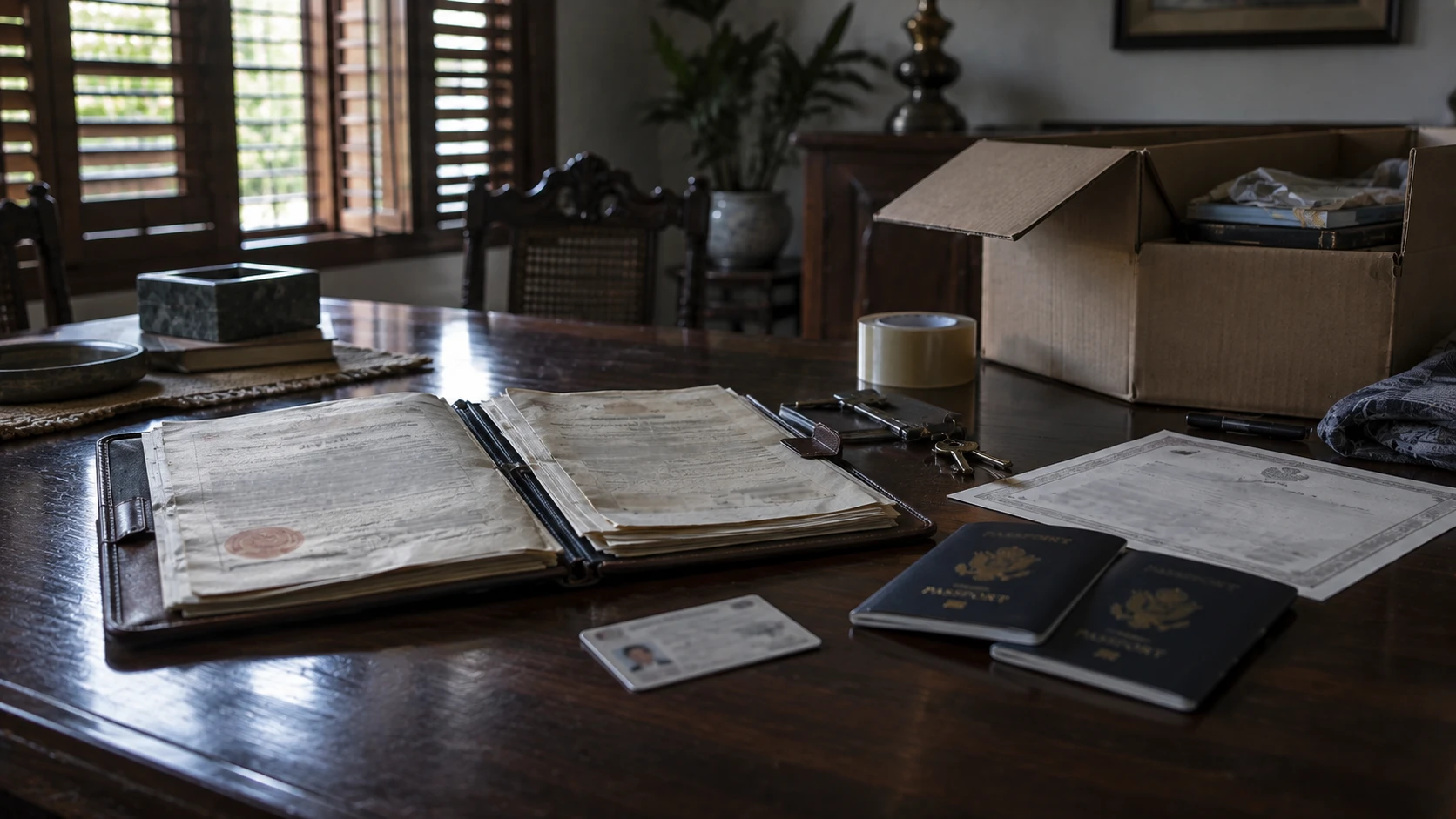


Section 5(2) of the Citizenship Act No. 18 of 1948 says a person born outside Sri Lanka shall have the status of a citizen if at the time of birth either parent was a citizen and if, within one year or such further period as the Minister may for good cause allow, the birth is registered. The status is conditioned on the registration, not merely evidenced by it, so a child born overseas whose birth was never registered is not a Sri Lankan citizen, whatever the family assumed. No reported judgment construing the subsection has been found, and the Department's own material sometimes describes registration in the looser language of confirming citizenship, so the point is put here on the text of the Act.
The discovery usually comes late and at a bad moment. Someone in their thirties applies for a Sri Lankan passport to visit a dying relative, or to claim a share of family land, and is told there is nothing on the register. The parents remember intending to do it. Nobody remembers doing it.
Why the paperwork was the thing itself
Many countries with citizenship by descent treat registration as an administrative record of a status that arose at birth. Sri Lanka does not. The Act makes the registration the operative act, which is why a family's certainty about their child's nationality has no legal effect if the register is empty.
That governs everything else on this page. You cannot prove your way into the status with a parent's birth certificate and a family tree. Either the registration happened within the statutory framework or a discretionary route has to be found now.
The one-year window, and what happens after it
Section 5(2) sets a period of one year from the birth for the registration to be made, and allows extension for good cause. That phrase is doing a great deal of work. It is the difference between a family that missed the deadline by a few years for reasons they can explain, and one that is coming forward three decades later.
In departmental practice late registration is routine rather than exceptional, and the Department prices the delay: a fee for the registration itself with an additional amount for each year of lateness. Two cautions about that. Neither the practice nor the fee is written into the Act, so both can change without an amendment to it. And the fact that a fee schedule exists for late applications does not convert the extension into an entitlement. It remains a discretion, exercised on the reasons given.
Mothers, and the 2003 dividing line
Until 2003 descent ran through the father. The Citizenship (Amendment) Act No. 16 of 2003 changed that, and a child born abroad after it can take citizenship by descent through either parent.
Births before 2003 to a Sri Lankan mother are the harder case, and they are common in the diaspora because they are exactly the generation now discovering the problem. The 2003 Act dealt with them through section 5A, which applies to a person born within or outside Sri Lanka after the appointed date but before that Act commenced, in one of two situations: where the mother only was a citizen at the time of birth and the person is over twenty-two years of age, or where neither parent was a citizen at the birth but one of them subsequently became one. It is not a simple retrospective grant. The route carries conditions, including in one limb a requirement to renounce other citizenship and to be ordinarily resident in Sri Lanka, with a further provision allowing foreign citizenship to be retained where the Minister is satisfied there is benefit to Sri Lanka.
The Department's own historical material describes the 2003 amendment as extending descent to the maternal line with effect from the appointed date in 1948. That is the Department's framing and it is not wrong as a description of section 5 as amended. It does not follow that an unregistered pre-2003 birth abroad is cured by it, because section 5(2) still conditions the status on registration. Such a birth still needs a late registration or the section 5A route.
The adult who was never registered
This is the case that brings people to a lawyer, and the honest answer is uncomfortable.
Three routes exist in principle, and the differences between them matter more than the fact that there are three. A late registration under section 5(2), relying on the Minister's power to allow a further period for good cause. Section 5A, which is open only to a person born before the 2003 Act commenced whose mother only was a citizen at the birth and who is over twenty-two, or neither of whose parents was then a citizen but one of whom later became one, and then under one of two limbs: subsection (2) requires renunciation of the other citizenship and that the applicant is and intends to continue ordinarily resident in Sri Lanka, while subsection (3) allows the other citizenship to be retained and carries no residence condition, but requires the Minister to be satisfied that the declaration would be of benefit to Sri Lanka. Or registration under section 11, which is a different mechanism from descent altogether.
Section 11 looks more promising than it is. Subsection (1)(b)(ii) covers exactly this person, someone either of whose parents was a citizen and who would have been a citizen under section 5(2) had the birth been registered. And subsection (2)(b) says such a person shall be registered on making the application, unless the Minister disallows it on grounds of public policy, which is closer to a right than a discretion. The catch is subsection (1)(c): the applicant must be, and intend to continue to be, ordinarily resident in Sri Lanka. Section 15 adds that a citizen of another country is not to be granted citizenship by registration unless that citizenship is renounced, subject to a Ministerial exemption. Subsection (3) then makes the Minister's refusal final and not contestable in any court.
What makes the difference in practice is the quality of the explanation for the delay and the strength of the documentary chain: the Sri Lankan parent's own citizenship evidence, the foreign birth certificate, the marriage certificate where it matters, and whatever contemporaneous material shows the connection was maintained. That is the work, and it is worth doing properly before an application rather than after a refusal.
Grandparents confer nothing
The question arrives constantly and the answer is short. Descent under the Act runs from parent to child. A Sri Lankan grandparent gives a grandchild no entitlement of its own.
The chain matters instead. If your parent was born abroad to Sri Lankan parents and their birth was registered, your parent became a citizen by descent and, unless that status had been lost under section 20 before you were born (which can happen where the parent also held another nationality), you may be able to take descent from them. If your parent's birth was never registered, your parent is not a citizen, and nothing can descend from a status that does not exist. Families who ask about grandparents are usually asking the wrong question about the right problem, which is whether the generation above them was ever registered.
There are provisions concerning grandfathers in the Act, but they belong to the sections dealing with citizenship by descent for people born before the appointed date, 15 November 1948, and they do not create a modern ancestry route.
Dual citizenship is a different question
People conflate two things that the Act keeps apart. Citizenship by descent is about whether you are a citizen at all. Dual citizenship is about whether a person who is or was a Sri Lankan citizen may hold another nationality as well, and it is governed by the provisions inserted in 1987 dealing with resumption by those who lost citizenship on naturalising elsewhere, and retention by those about to.
The criteria people encounter in practice, the age thresholds, the deposit levels, the professional qualifications and the fee, are not figures written into the Act. The fee is set at prescribed rates by regulation under sections 19(8) and 26, and the rest are departmental requirements applied under the Minister's discretion in section 19. All of them can be changed without amending the Act, so the current published requirements should be checked at the time of applying and not taken from any article, including this one.
If you were never registered at birth, dual citizenship is not your route. You cannot resume a citizenship you never had.
What to do with this
- Establish what is actually on the register before doing anything else. The question is not what the family believes but what the Department holds.
- Work upwards a generation at a time. Your position depends on your parent's, and your parent's may depend on theirs.
- Locate the documents early: the Sri Lankan parent's citizenship evidence, the foreign birth certificate and the relevant marriage certificate. Applications fail on the documentary chain more often than on the merits.
- Where the birth is pre-2003 and the Sri Lankan parent is the mother, expect the section 5A route rather than a simple registration, and expect conditions.
- Ask about ordinary residence early. If the only available routes require it and you will not be moving, that changes the advice rather than the paperwork.
- Treat published fees and criteria as current practice rather than law, and confirm them when you apply.
Where citizenship matters because of land or an estate rather than a passport, the position on inheriting and holding property is dealt with in buying property in Sri Lanka as a foreigner, and the documents an application or transaction will need from abroad in signing documents abroad for use in Sri Lanka.
Registration is one of five Sri Lankan matters that catch families who emigrate, set out in your Sri Lankan legal loose ends. If the move itself is still ahead of you, the Australian side is in Australian permanent residence for Sri Lankans.