

A foreign arbitral award is enforced in Sri Lanka by an application to the High Court under section 31 of the Arbitration Act, made within one year and fourteen days of the award. The court enters judgment unless a section 34 ground is proved.
Parties choose arbitration for its neutrality, its privacy, and the fact that an award can travel across borders. That last quality depends on the law of the country where enforcement is sought. In Sri Lanka the governing statute is the Arbitration Act No. 11 of 1995, certified on 30 June 1995, which has the distinction of being the first arbitration legislation in South Asia built on the UNCITRAL Model Law on International Commercial Arbitration.
The Arbitration Act and the New York Convention
The Act does two jobs. It provides a framework for arbitrations seated in Sri Lanka, and, as its long title says, it gives effect to the Convention on the Recognition and Enforcement of Foreign Arbitral Awards of 1958. Sri Lanka signed the Convention on 30 December 1958 and ratified it on 9 April 1962, and it entered into force for Sri Lanka on 8 July 1962. The UNCITRAL status table records no reservation: Sri Lanka did not limit the Convention to awards made in other contracting states, nor to disputes considered commercial under its own law.
The Act reflects that position. Section 33 provides that a foreign arbitral award, irrespective of the country in which it was made, shall be recognised as binding and, on application under section 31, enforced by filing the award. Section 50 defines a foreign arbitral award as an award made in an arbitration conducted outside Sri Lanka, and section 25(3) deems an award to have been made at the place of arbitration stated in it. The practical upshot is that an award made in any country can in principle be enforced against assets held in Sri Lanka. Section 2(3) adds that where the State is a party to an arbitration agreement it is bound by the Act.
Which court, and how the application is made
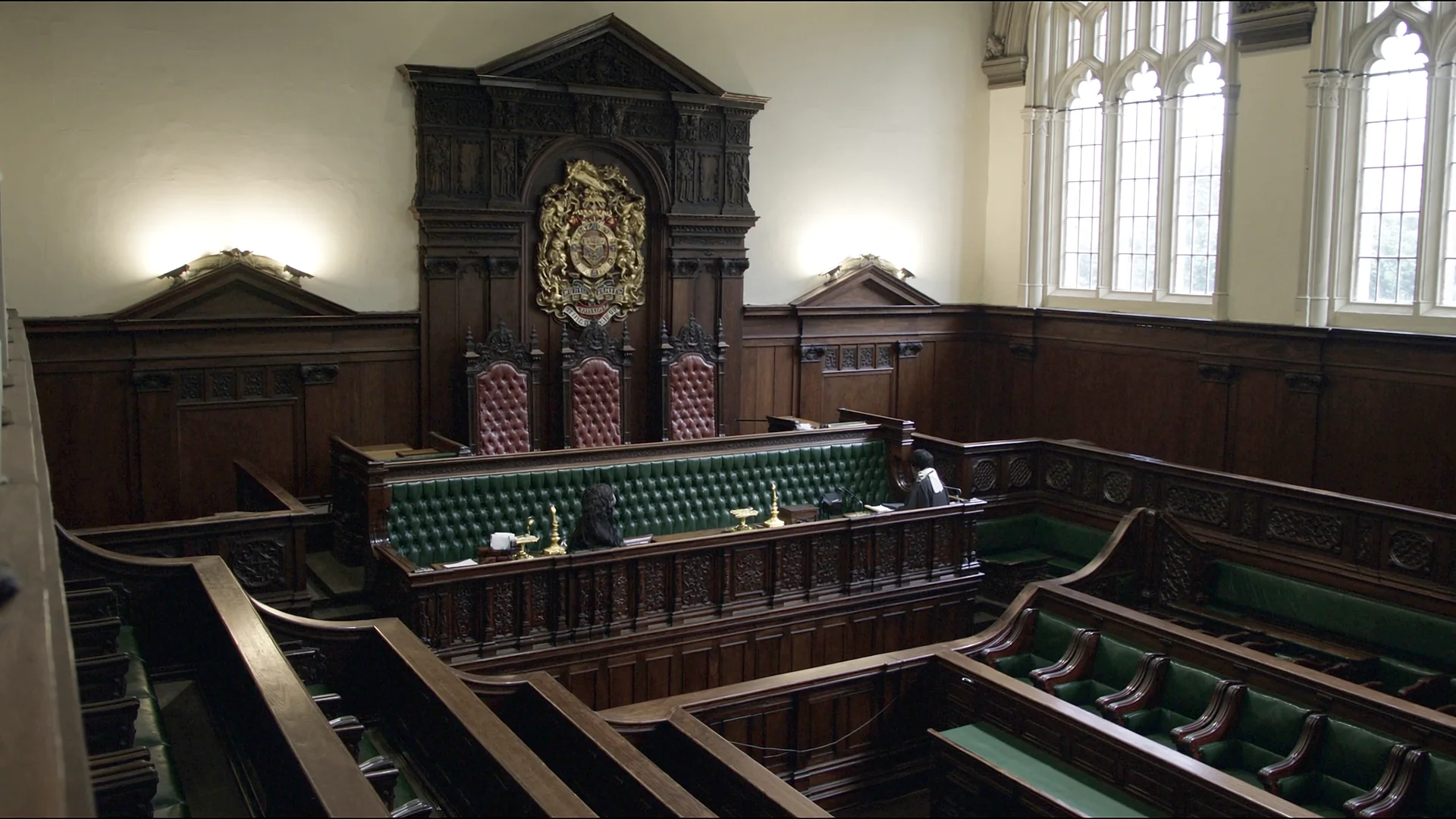
Section 50 defines the High Court for the purposes of the Act as the High Court holden in the judicial zone of Colombo, or in any other zone the Minister designates with the concurrence of the Chief Justice. In practice these applications go to the Commercial High Court in Colombo, designated under section 2(1) of the High Court of the Provinces (Special Provisions) Act No. 10 of 1996, which lists the enforcement, setting aside and recognition of arbitral awards, including foreign awards, among the matters it hears.
Section 40 fixes the procedure. Every application under the Act is by petition and affidavit, all other parties to the arbitration are named as respondents and given notice, and the court appoints a day for determination and a date for the respondents to file written objections supported by affidavit. Evidence is by affidavit unless the court decides to hear oral evidence, and section 40(4) directs the court to deliver its determination as expeditiously as possible. Section 42 allows notice to be served in or out of Sri Lanka by registered post to the respondent's usual or last known address.
The section 31 application: time limit and documents
Enforcement is not automatic. Section 31(1) allows a party to the arbitration agreement to apply to the High Court for enforcement within one year after the expiry of fourteen days from the making of the award. Both limbs run from the making of the award, so the window opens fourteen days after that date and closes a year later. Do not compute it from the date the award was received: section 27, which governs a request to the tribunal to correct or interpret an award, runs from receipt and can be varied by agreement, and neither feature moves the section 31(1) date. An award creditor who lets the year run out has lost the statutory route.
Section 31(2) requires the application to be accompanied by the original award or a duly certified copy, and the original arbitration agreement or a duly certified copy. A copy is deemed duly certified if it purports to be certified by the tribunal or one of its members, or if it is otherwise certified to the court's satisfaction. Under sections 31(3) and (4), a document in a language other than an official language of the court or English must be accompanied by a translation certified by an official or sworn translator or by a diplomatic or consular agent in Sri Lanka of the country where the award was made. Section 31(5) lets the court receive those documents as sufficient evidence of what they record.
| Step | Period | Section |
|---|---|---|
| Request to the tribunal to correct, interpret or supplement the award | Fourteen days from receipt of the award, unless the parties agree otherwise | Section 27 |
| Application to set aside an award made in an arbitration held in Sri Lanka | Sixty days from receipt of the award | Section 32(1) |
| Application to enforce an award, domestic or foreign | Within one year after the expiry of fourteen days from the making of the award | Section 31(1) |
| Appeal from a High Court order under Part VII | To the Supreme Court, on a question of law only, with leave | Section 37(2) |
What the court does, and does not, examine
If no application to set aside is pending and the court sees no cause to refuse recognition under sections 33 and 34, section 31(6) requires it, on a day notified to the parties, to file the award and give judgment according to it, and a decree is then entered. Section 41 provides that the decree may be enforced in the same manner as a decree entered under the Civil Procedure Code, so the ordinary machinery of execution against the debtor's assets applies.
The enforcing court does not sit as an appeal court over the arbitration. It will not re-examine the tribunal's findings of fact or how it applied the law. The merits are closed. The court only checks that the award clears the limited gateway the Act provides.
Section 37(1) provides that no appeal or revision lies from any order of the High Court under the Act except from an order under Part VII, which covers enforcement and setting aside. Section 37(2) confines that appeal to the Supreme Court, on a question of law only, and only with the leave of the Supreme Court first obtained. Under section 37(4) the parties may agree in writing to exclude any right of appeal, and section 38(1) then prevents the Supreme Court from granting leave at all.
The section 34 grounds for refusal
That gateway is deliberately narrow. Section 34(1) provides that recognition or enforcement of a foreign award may be refused only on the following grounds. The first group, in section 34(1)(a), must be proved by the party resisting enforcement:
- a party to the arbitration agreement was under some incapacity, or the agreement is not valid under the law the parties chose or, failing a choice, under the law of the country where the award was made;
- the party resisting enforcement was not given proper notice of the appointment of an arbitrator or of the proceedings, or was otherwise unable to present its case;
- the award deals with a dispute not contemplated by or not falling within the submission to arbitration, or decides matters beyond its scope, though a severable part within the submission may still be enforced;
- the composition of the tribunal or the procedure was not in accordance with the parties' agreement or, failing agreement, with the law of the country where the arbitration took place;
- the award has not yet become binding on the parties, or has been set aside or suspended by a court of the country in which, or under the law of which, it was made.
The second group, in section 34(1)(b), may be found by the court itself: that the subject matter is not capable of settlement by arbitration under Sri Lankan law, or that recognition or enforcement would be contrary to the public policy of Sri Lanka. These are exceptions, and it is for the party resisting enforcement to make out the first group. Section 34(2) deals with the common tactic of a set-aside application at the seat: the Sri Lankan court may adjourn its decision and, on the award creditor's application, order the other party to provide appropriate security.
For awards made in Sri Lanka the equivalent grounds appear in section 32, with a sixty-day window from receipt of the award. Section 35(1) requires pending applications to enforce and to set aside to be consolidated, and section 35(2) prevents a party whose set-aside application has been refused from raising the same grounds again against enforcement.
Interim measures and security while enforcement runs
Section 13(1) allows the tribunal, at a party's request, to order interim measures to protect or secure the claim, and section 13(2) allows the High Court to enforce such an order on application. Section 13(3) makes clear that seeking that enforcement is not a waiver of the arbitration agreement. Before a tribunal is constituted, parties have obtained injunctions from the courts on the grounds in section 54 of the Judicature Act No. 2 of 1978, using the procedure in sections 662 to 667 of the Civil Procedure Code; the Act is silent on that stage and the courts have filled the gap in practice.
One limit deserves attention. Section 50 defines an award as a decision of the tribunal on the substance of the dispute, and Part VII contains no separate provision for interim or partial awards or for emergency arbitrator orders. Practitioners treat that as a gap in the Act, so a creditor holding an interim award should not assume it can be filed under section 31.
Objections seen in practice
Most resistance to enforcement falls into a handful of categories. Objections to the arbitration agreement itself turn on section 3, which requires the agreement to be in writing and treats an exchange of letters or other telecommunications that records the agreement as sufficient. Notice objections under section 34(1)(a)(ii) are met by producing the tribunal's record of service. Scope objections are answered by the proviso allowing a severable part of the award to be enforced. Public policy is argued often, but the Act frames it as a ground for the court's own finding rather than an invitation to reargue the case. Procedural objections, that the application is out of time, that a copy was not properly certified, or that a translation was not certified as section 31(4) requires, are the most avoidable reason for delay.
How this compares with enforcing a foreign judgment
A foreign court judgment is a different instrument enforced under a different statute, the Reciprocal Recognition, Registration and Enforcement of Foreign Judgments Act No. 49 of 2024, and the two should not be conflated. Three differences matter when a dispute resolution clause is being drafted.
- Reach. An award from any country can be filed under section 33. A judgment can be registered only if the Minister has listed the country of the original court by Order under section 2 of the 2024 Act.
- Grounds. Both routes exclude the merits. The section 34 grounds are the internationally familiar Convention grounds. Under the 2024 Act a commercial judgment has no equivalent objection stage at registration: the debtor's route is an application to set the registration aside under section 11(1), on grounds that include defective notice and reversal of the judgment on appeal abroad.
- Appeal. A commercial judgment registration order cannot be appealed at all under section 12(1) of the 2024 Act. An enforcement order under the Arbitration Act can go to the Supreme Court on a question of law with leave, unless the parties have excluded appeals.
Drafting to make enforcement easier
For a contract being drafted now, the work that matters happens long before any dispute. The arbitration clause should set out the seat, the rules, the number of arbitrators and the language with some care, because those choices affect both how the arbitration runs and how easily the award can later be enforced. Section 16 lets the parties fix the place of arbitration, section 6 lets them fix the number of arbitrators (three by default), and section 25 requires a written, signed and reasoned award stating its date and place. A clean clause and a properly made award are what keep the Sri Lankan enforcement route straightforward. Both the clause and the enforcement application are covered by alternative dispute resolution practice.
Sri Lanka has institutional arbitration facilities and a body of court decisions applying the Act, and section 44 excludes the period of an arbitration when calculating prescription, so a claimant does not lose time on the limitation clock by arbitrating. For an award creditor, that framework means a predictable path from award to recovery, provided the one-year window in section 31 is diarised on the day the award arrives.