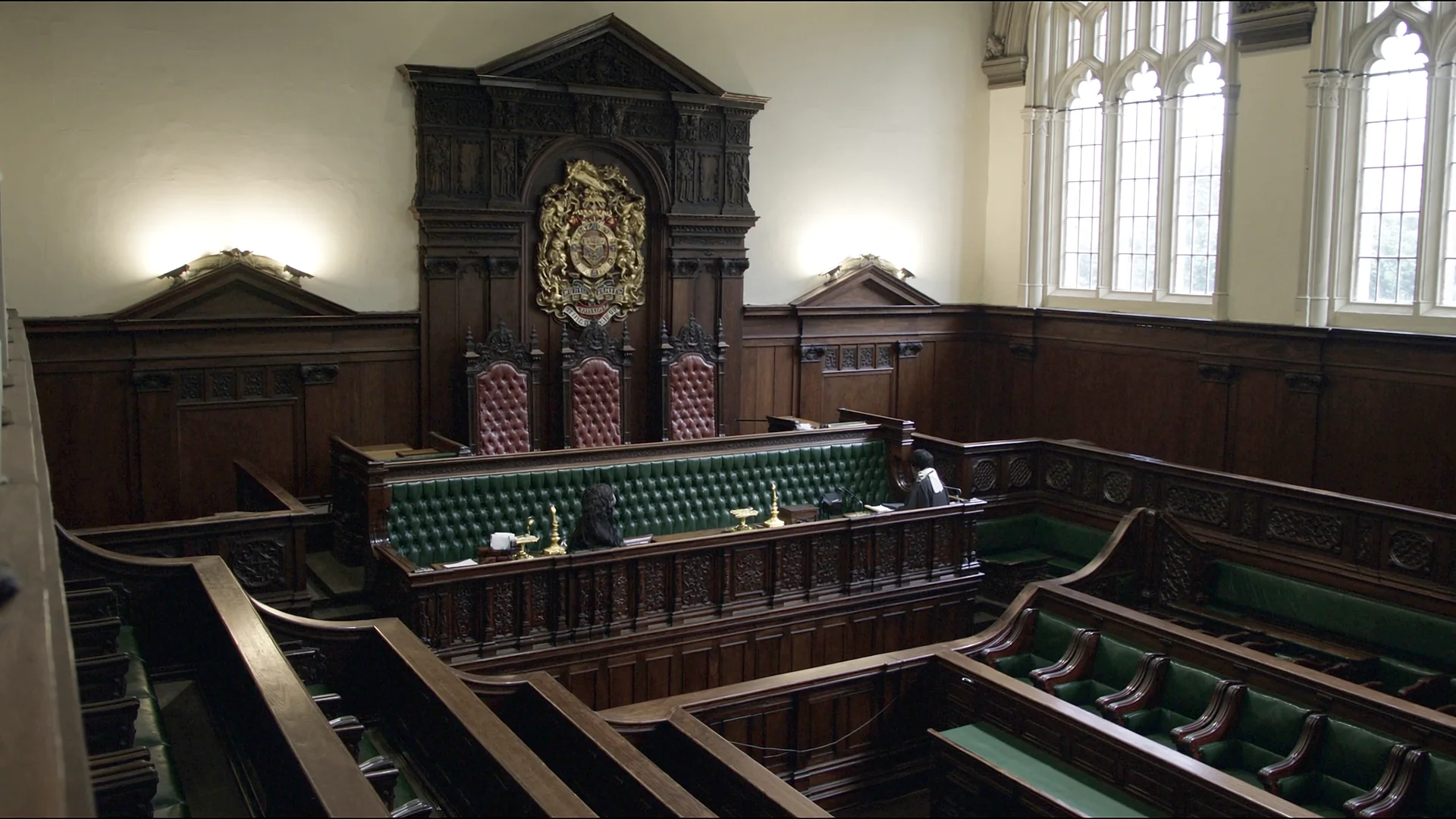


Under section 5(1) of the Mediation (Civil and Commercial Disputes) Act No. 13 of 2026, where the parties have agreed to mediate, no court may entertain proceedings on the dispute until a certificate of non-settlement is produced. Provisional remedies are the only exception.
Sri Lanka has had court-annexed mediation for decades and a Commercial Mediation Centre since 2000. What it has not had is a statute that makes an agreement to mediate mean something before a court. The 2026 Act changes that, and section 28 repealed the Commercial Mediation Centre of Sri Lanka Act No. 44 of 2000, with the Centre's assets and liabilities vesting in the State.
The Act runs to thirty sections. Four of them will decide how it is used.
Section 5: the court cannot hear you yet
Section 5(1) provides that where the parties to a dispute have agreed to mediate under a mediation agreement, or where mediation proceedings have commenced under the Act even in the absence of an agreement, then notwithstanding anything to the contrary in any other written law, no proceedings in regard to that dispute shall be instituted in or be entertained by a court unless a certificate of non-settlement is produced.
Read that twice. It is not a stay, and it is not a discretion the court exercises. Where the section applies, the proceedings cannot be entertained. The certificate of non-settlement, issued under section 21, becomes the ticket to the courthouse.
There is one carve-out. Section 5(2) disapplies the bar where a party seeks a provisional remedy under Part V of the Civil Procedure Code or any other law. So an enjoining order or an interim injunction remains available while mediation runs. That exception is narrow and it is the answer to the obvious objection, which is that a mandatory mediation step would otherwise let a defendant dissipate assets in comfort.
Section 6: mediating no longer costs you time
The reason parties have historically rushed to file is prescription. Section 6 removes it as a factor. In computing the period of prescription for any cause of action, the period from the commencement of the mediation to the date of the Settlement Agreement, or of the certificate of non-settlement, is excluded, notwithstanding anything to the contrary in any other written law.
Combined with section 5, the effect is coherent: you are required to try mediation first, and you are not penalised on the limitation clock for doing so.
Section 11: refusing to mediate now has a price
Section 11 is one sentence and it will be cited often. A court shall, in awarding costs in any action or proceeding relating to a civil or commercial dispute, take into account whether any party has unreasonably refused to participate in mediation.
That is a mandatory consideration, not a permissive one. A party who declines an invitation to mediate is creating a costs argument against itself, and the decision to refuse should be documented at the time with reasons that will read well later.
What cannot be mediated
Section 3 excludes disputes whose settlement requires terms that can be given effect to only on a decree or order of court, including the disputes set out in the schedule to the Act.
The proviso matters, though. Matters relevant to such disputes may still be mediated, for the purpose of submitting terms of settlement to court for consideration of incorporation in a judgment, decree or order in compliance with applicable law. So exclusion from the Act's mandatory machinery is not the same as a prohibition on mediating the underlying issues.
Confidentiality
Section 16(1) obliges the mediator, the parties and everyone else participating to maintain confidentiality over what is discussed. The list is deliberately wide:
- statements made, opinions expressed, and options and settlement proposals generated by a party
- interpretations offered by a party or any professional
- an invitation by a party to engage in mediation, or the fact that a party was willing to participate
- the fact that a party had or had not been willing to accept any settlement proposal
- a document prepared primarily for the mediation
Section 16(2) then provides that statements made during a mediation on those matters are made without prejudice. Section 25 supports the regime by providing that a mediator or official is not to be called as a witness to a signature.
The inclusion of an invitation to mediate within the confidentiality obligation is worth pausing on, because it sits alongside section 11. The fact of a refusal can bear on costs, while the content of what was discussed remains protected.
The settlement, and two ways to enforce it
Section 19(1) provides that a Settlement Agreement is binding between the parties and enforceable in law as a valid contract, though its terms cannot affect the rights of persons who are not parties to it.
Section 19(2) adds real teeth. Where a party to a Settlement Agreement institutes proceedings against another party in respect of a matter already settled by that agreement, the court shall have no jurisdiction to hear and determine the matter. That is a jurisdictional bar, not a defence to be pleaded and argued.
The second route is a decree. Under section 22(1) a party may, within twelve months of the date of the Settlement Agreement, apply to the High Court to have the settlement entered as a decree of court. Section 22(2) preserves whatever rights and remedies exist under the agreement whether or not that application is made.
Twelve months is the point to diarise on the day the agreement is signed.
When the High Court will refuse a decree
Section 26(1) lists the grounds on which the High Court may refuse to enter a Settlement Agreement as a decree, where another party to the agreement establishes them:
- a party to the agreement was under some incapacity
- the agreement is not final according to its terms
- the obligations under it have been duly performed, or are not clear or comprehensible
- there was a serious breach by the mediator of the standards applicable to the mediator or the mediation, without which that party would not have entered into the agreement
- there was a failure by the mediator to comply with the duty to disclose a conflict of interest under section 15(2)(g), and that failure had a material impact or undue influence on the party
Two of those five concern the mediator rather than the parties. Choosing a mediator who documents disclosure properly is therefore not a formality; it protects the enforceability of whatever is agreed.
What this means for contract drafting
The practical consequence of section 5 is that a mediation clause is now a jurisdictional gate rather than an expression of goodwill. Drafting it loosely creates real problems: a vague clause invites argument about whether the parties agreed to mediate at all, and therefore about whether the court can hear the case.
- Say plainly whether mediation is a condition precedent to proceedings, and if so, how it is initiated and when it is treated as concluded.
- Consider how the clause interacts with any arbitration agreement, since arbitration is governed separately by the Arbitration Act No. 11 of 1995 and enforcement of an award follows a different route, which is covered separately in enforcing a foreign arbitral award.
- Preserve access to provisional remedies expressly, even though section 5(2) already does so.
- Existing contracts with mediation clauses are affected too. They should be reviewed rather than assumed to be unchanged.
Practical points
- Before filing any civil or commercial action, check whether a mediation clause exists. Under section 5(1) the absence of a certificate of non-settlement can stop the case at the door.
- Prescription is no longer a reason to refuse mediation, because section 6 excludes the mediation period.
- Record the reasons for declining an invitation to mediate. Section 11 makes that refusal a mandatory costs consideration.
- Diarise twelve months from any Settlement Agreement for a section 22 application to the High Court.
- Check the mediator's conflict disclosure. Section 26(1) makes a failure there a ground for refusing a decree.
The Act is new, and how strictly section 5 is applied will be worked out in the courts over the next few years. What is already clear is that a mediation clause in a Sri Lankan commercial contract is no longer a soft obligation, and that the decision to ignore one now carries consequences at the threshold of the case rather than at the end of it.